Sector Growth in the Hospitality and Service Industries
Introduction
The hospitality and service industries continue to grow and develop across the world. Hotels, restaurants, tourism businesses, transport services, leisure facilities, and visitor attractions are expanding to meet changing customer expectations and increasing global demand.
Sector growth refers to the expansion of hospitality activities through new businesses, improved services, increased investment, higher customer demand, and stronger international tourism activity. This growth makes hospitality one of the most dynamic sectors in the global economy.
For students exploring hospitality courses, understanding sector growth is important because it shows how the industry continues to create opportunities, adapt to trends, and contribute to economic development around the world.
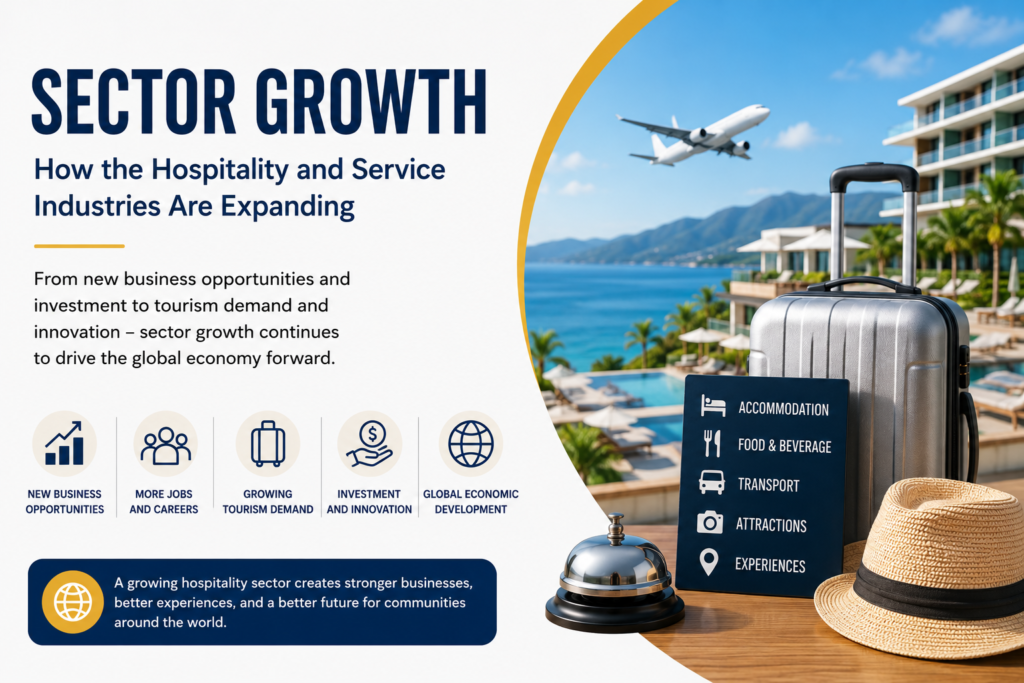
What Is Sector Growth in Hospitality?
Sector growth means the hospitality and service industries are increasing in size, value, and influence over time. Growth can be measured in several ways, including:
- More hospitality businesses opening – New hotels, restaurants, cafés, resorts, leisure venues, and tourism companies are continually being developed to meet growing customer demand.
- Increasing customer numbers – More people are travelling, dining out, attending events, and spending money on tourism and leisure experiences than ever before.
- Greater investment in facilities and services – Businesses and governments invest in accommodation, attractions, transport links, entertainment venues, and customer technology to support industry expansion.
- Expansion into new markets – Hospitality businesses often open additional branches, develop international operations, or target new customer groups such as business travellers, wellness tourists, or luxury travellers.
- Improved service innovation – The industry continues to introduce new ideas such as digital booking systems, personalised experiences, sustainable tourism practices, and smart hospitality technology.
This shows that hospitality is not a static industry. It is constantly evolving and adapting to changing market conditions and customer expectations.
Growth Creates New Business Opportunities
One of the main reasons sector growth is important is because it creates opportunities for businesses to expand and diversify.
As customer demand increases, hospitality companies may:
- Develop new hotels and accommodation – Growing tourism often increases demand for business hotels, resorts, boutique accommodation, serviced apartments, and budget lodging options.
- Open restaurants and food venues – Hospitality growth encourages investment in restaurants, cafés, food halls, catering businesses, and international dining concepts.
- Expand tourism experiences – Tour operators, leisure attractions, entertainment venues, museums, and adventure tourism providers may develop new services to attract visitors.
- Create wellness and lifestyle services – Modern travellers increasingly seek spa facilities, fitness centres, wellness retreats, and health-focused tourism experiences.
- Invest in events and conferences – Cities with strong hospitality sectors often expand convention centres, exhibition venues, and business tourism facilities to attract corporate visitors.
These developments allow businesses to reach new markets and respond to changing customer interests. Sector growth therefore supports innovation, entrepreneurship, and economic expansion.
Changing Lifestyles and Consumer Demand
Hospitality sector growth is strongly linked to social and economic changes. Over time, improvements in income, transport, technology, and global mobility have increased demand for hospitality services.
Several important trends support industry growth:
Rising Incomes
As incomes increase in many countries, more people can afford holidays, dining experiences, entertainment, and leisure activities. This creates larger customer markets for hospitality businesses.
International Travel Growth
Improved air travel, better transport systems, and easier access to international destinations have increased tourism worldwide. More travellers create more demand for accommodation, restaurants, transport services, and attractions.
Digital Technology
Online booking systems, mobile apps, social media, and digital marketing have made travel planning easier and more accessible. Customers can now compare prices, read reviews, and book experiences quickly from anywhere in the world.
Experience-Based Spending
Modern consumers increasingly value experiences rather than only physical products. Many people choose to spend money on travel, cultural activities, food experiences, festivals, and leisure experiences that create memories and personal enjoyment.
Flexible Working and Lifestyle Changes
Remote working and flexible lifestyles have also influenced hospitality growth. Some travellers now combine work and leisure travel, increasing demand for hotels, co-working spaces, and extended-stay accommodation.
These trends show how hospitality growth reflects wider social and economic changes taking place globally.
Investment and Innovation in Hospitality
Sector growth is also closely connected to investment and innovation. As hospitality industries expand, businesses often improve facilities, adopt new technology, and develop better customer experiences.
Examples of hospitality investment include:
- New hotel developments – Investors may finance luxury hotels, eco-resorts, business accommodation, or tourism complexes in growing destinations.
- Technology improvements – Hotels and restaurants increasingly use online booking systems, contactless payments, AI customer service tools, and digital communication platforms.
- Facility upgrades – Businesses often renovate rooms, dining areas, spas, leisure facilities, and public spaces to remain competitive.
- Staff training and development – Growing hospitality businesses invest in customer service training, leadership development, and operational skills to improve service quality.
- Sustainability initiatives – Many hospitality companies now invest in environmentally friendly operations such as energy efficiency, waste reduction, sustainable sourcing, and eco-tourism practices.
Governments may also support sector growth through:
- Infrastructure development
- Tourism promotion campaigns
- Airport and transport investment
- Visitor attraction funding
- Destination marketing initiatives
This combination of private and public investment helps hospitality industries continue expanding and improving over time.
Hospitality Growth and Global Competitiveness
A strong hospitality sector can improve a country’s ability to compete internationally. Destinations with high-quality hotels, efficient transport systems, excellent restaurants, and attractive visitor experiences are often more successful at attracting tourists and international business events.
Hospitality growth can strengthen competitiveness through:
- Improved destination image – Well-developed hospitality services can help countries build positive international reputations.
- Increased tourism spending – Strong tourism industries attract domestic and international visitors who contribute to the local economy.
- Business event opportunities – Cities with modern hotels, transport systems, and conference facilities are more likely to attract international exhibitions, trade events, and corporate meetings.
- International partnerships – Hospitality growth can encourage cooperation between tourism boards, airlines, travel companies, and international investors.
- Long-term economic development – Successful hospitality industries support employment, taxation, business growth, and infrastructure improvement.
This shows that hospitality growth is important not only for individual businesses but also for national economic development and competitiveness.
Managing Hospitality Growth Responsibly
Although sector growth creates many advantages, it also creates challenges that businesses and governments must manage carefully.
As hospitality industries expand, organisations need to focus on:
Maintaining Service Quality
Businesses must ensure customer service standards remain high even as operations become larger and busier.
Workforce Development
Growing hospitality sectors need skilled employees. Businesses must recruit, train, and support staff effectively to meet customer expectations.
Sustainability
Tourism growth can increase pressure on local environments, resources, and communities. Hospitality businesses must manage waste, energy use, and environmental impact responsibly.
Technology Adaptation
Customer expectations continue to change rapidly. Businesses need to invest in digital systems, online communication, and modern technology to remain competitive.
Resource Management
Hotels, restaurants, and tourism businesses must manage costs, supplies, staffing, and facilities efficiently as they grow.
This shows that successful sector growth is not simply about becoming larger. It is also about becoming more effective, sustainable, and adaptable.
Case Study: Expanding Coastal Resort Destination
A coastal destination becomes increasingly popular with both domestic and international tourists over several years. Visitor numbers rise because of attractive beaches, entertainment facilities, and improved transport access.
As tourism demand grows:
- Investors build new hotels and resorts
- Restaurants and cafés expand their services
- Entertainment venues and attractions open
- Transport links improve
- Existing businesses upgrade facilities and digital booking systems
- Tourism companies create new visitor packages and experiences
This demonstrates sector growth in practice because the destination is not only receiving more visitors but also increasing the quality and range of hospitality services available.
The growth benefits the local economy by:
- Creating employment opportunities
- Attracting investment
- Increasing tourism spending
- Improving infrastructure
- Strengthening destination competitiveness
The case study also shows that hospitality growth requires adaptation. Businesses must continue improving services and facilities to meet changing customer expectations and maintain competitiveness.
Building a Career in a Growing Hospitality Industry
The continued expansion of hospitality and tourism creates strong career opportunities for people with the right skills and knowledge.
Studying hospitality courses can help learners prepare for careers in areas such as:
- Hotel and accommodation management
- Tourism operations
- Restaurant and food service management
- Event and conference management
- Customer experience and guest relations
- Resort and leisure operations
- Travel and tourism services
- Hospitality leadership and business management
As the industry continues to grow globally, employers increasingly look for professionals who understand customer service, operations, tourism trends, business development, and hospitality innovation.
For students interested in developing careers in this expanding sector, Click College offers Hospitality and Tourism Management programmes designed to provide practical knowledge and industry-focused skills.
You can explore Click College’s Hospitality and Tourism Management courses here:
https://clickcollege.com/hospitality-tourism-management
You can also visit the Click College homepage here:
https://clickcollege.com/
Explore Hospitality Courses
Start your journey in hospitality and tourism with an accredited Click College course. Enrol today and build the skills, knowledge, and confidence to progress into a management role.







Recent Posts
Professional Diploma or Higher Qualification Pathway: Which Should You Choose?
Professional Diploma or Higher Qualification Pathway: Which Should You Choose? Choosing the right online qualification is not always simply a question of choosing the longest course or the highest level. For many learners, the better question is: what kind of study route fits my goals right now? Some learners want a focused qualification in one […]
Professional Diploma in Leadership and Management: Course Guide
Professional Diploma in Leadership and Management: Course Guide A Professional Diploma in Leadership and Management is designed for learners who want to develop advanced leadership, strategic thinking and organisational management skills without committing immediately to a full degree programme. Leadership and management are essential in almost every sector. Whether you work in business, education, hospitality, […]
Professional Diploma in Business Management: Who Is It For?
Professional Diploma in Business Management: Who Is It For? A Professional Diploma in Business Management is designed for learners who want to build practical business knowledge without committing immediately to a full degree or long higher education programme. It can be a useful option for people who want to understand how organisations work, how teams […]