
What is meant by the level of a qualification?
International Qualification Frameworks
Qualifications are typically defined by two key characteristics: level and credit value. Different countries use qualification frameworks to categorise courses and awards according to these attributes, allowing education systems to maintain consistency and comparability.
In general terms, the level of a qualification indicates the academic demand and complexity of study, while the number of credits reflects the volume of learning required to complete it. As qualification levels increase, learners are expected to demonstrate more advanced knowledge, understanding and skills. Likewise, higher credit values usually indicate a longer period of study.
The image below shows the different levels of qualification provided by Click College; click on the image to expand it.
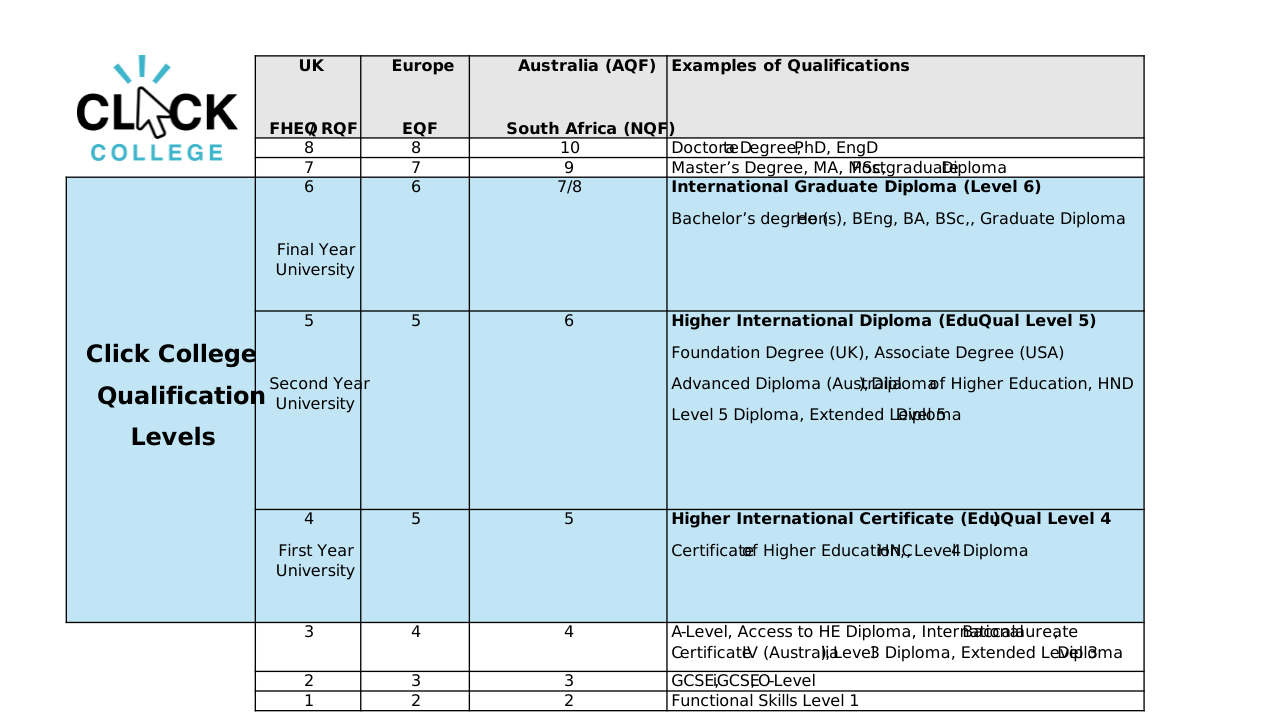
A qualifications framework acts as a reference structure that places qualifications within a recognised hierarchy. This enables learners, employers and educational institutions to understand how different qualifications compare, both within a country and internationally.
By providing a common point of reference, qualification frameworks also support international learner mobility, helping students move between countries and education systems that may otherwise use different qualification titles or structures.
UK
UK Higher Education Qualification Frameworks
In the UK, qualifications are positioned within nationally recognised qualification frameworks that describe their academic level and complexity.
For higher education qualifications, the primary reference framework is the:
Framework for Higher Education Qualifications (FHEQ)
The FHEQ sets out the academic levels for higher education awards in England, Wales and Northern Ireland, from Level 4 (Certificate level) through to Level 8 (Doctoral level). It provides a common benchmark that enables learners, institutions and employers to understand how qualifications compare in terms of academic demand and progression.
Click College’s Higher International qualifications are aligned to the FHEQ, meaning their academic level and credit value are benchmarked against UK higher education standards. This alignment supports transparency, progression and international recognition, while allowing flexibility in delivery and assessment.
Europe
European Qualifications Framework (EQF)
Across Europe, qualifications are mapped to the European Qualifications Framework (EQF). The EQF provides a common reference point that allows qualifications from different European countries to be compared more easily.
The EQF is closely aligned with UK higher education frameworks, with broadly comparable levels across most stages of study. Minor differences exist at certain levels, particularly around Levels 4 and 5, but overall the EQF supports academic mobility and international recognition across European education systems.
Australia
Australian Qualifications Framework (AQF)
Australia uses the Australian Qualifications Framework (AQF), which consists of 10 levels covering secondary education, vocational education and training, and higher education.
Within the AQF, Level 6 qualifications are broadly comparable to Foundation Degrees or Associate Degrees in the UK and Europe. These qualifications typically sit between secondary education and full bachelor’s degree study and reflect a similar level of academic complexity and credit volume.
USA
Higher Education Comparability in the USA
The United States does not operate a single national qualifications framework in the same way as the UK or Europe. However, meaningful comparisons can still be made by examining the structure, duration and academic level of higher education awards.
For example, the Associate Degree in the United States—often delivered through community colleges—is typically a two-year qualification positioned between high school completion and a bachelor’s degree. This places it broadly in line with Foundation Degrees, Higher International Diplomas or other Level 5 qualifications in the UK and Europe in terms of progression and academic positioning.
Higher Education Levels (UK)
UK higher education qualifications are described using academic levels, which indicate the complexity of learning, depth of understanding and level of responsibility expected of learners. These levels are set out within recognised higher education frameworks, such as the Framework for Higher Education Qualifications (FHEQ).
Level 4 – First Year Undergraduate Level
Level 4 represents the first stage of undergraduate-level study in the UK. Qualifications at this level are broadly comparable to the first year of a UK bachelor’s degree and are designed to introduce learners to higher education study within a chosen subject area.
Learners studying at Level 4 develop a sound knowledge of core concepts, principles and theories relevant to their field. They learn how to analyse information, explore different approaches to problem-solving and communicate ideas accurately and effectively.
Holders of Level 4 qualifications typically demonstrate the ability to take limited responsibility for their own learning and work. This level often serves as a foundation for progression to Level 5 qualifications.
Level 5 – Second Year Undergraduate Level
Level 5 corresponds to the second year of undergraduate study in the UK higher education system. Qualifications at this level build on the foundations established at Level 4 and require a greater depth of understanding and application of knowledge.
Examples of qualifications aligned to Level 5 include Foundation Degrees, Associate Degrees, Higher National Diplomas (HNDs) and Higher International Diplomas.
At Level 5, learners develop a more comprehensive understanding of the principles and practices within their subject area and are expected to apply this knowledge across a wider range of contexts. They also demonstrate increased independence, personal responsibility and the ability to make informed judgements and decisions.
Holders of Level 5 qualifications are typically prepared for roles involving greater autonomy and responsibility, or for progression to final-year undergraduate study at Level 6.
Level 6 – Bachelor’s Degree Level
Level 6 represents the final stage of undergraduate study and is academically comparable to a UK bachelor’s degree. At this level, learners demonstrate advanced knowledge, critical understanding and analytical capability within their chosen subject area.
Qualifications aligned to Level 6 include bachelor’s degrees and the International Graduate Diploma (IGD). Learners completing the IGD demonstrate the ability to evaluate complex concepts, synthesise information from a range of sources and apply knowledge to unpredictable or complex professional situations.
Holders of Level 6 qualifications typically exercise significant responsibility, judgement and autonomy. This level supports progression into professional or managerial roles and may also provide a foundation for further academic study, including postgraduate education.
Together, Levels 4, 5 and 6 form a progressive undergraduate pathway, with each level building on the knowledge, skills and responsibilities developed at the previous stage. Recognition and progression opportunities may vary by institution, employer and country.
Level 7 and 8
Masters level programmes sit at level 7 such as post-graduate diplomas and doctoral qualifications such as a PhD are at the highest level in the UK framework at level 8.
What are credits? Find out more information on credits here.
UK Accredited Qualifications
University level qualifications
100% Online
Study from Home Anywhere in the World
No Exams, No Deadlines, No Classes
Assessment is by written assignment
Expert Tutor Support
Request one to one tutor support any time
Get started today
Higher education courses that you can start today! All courses are available internationally and are fully accredited.