Tourism Links: How Hospitality and Tourism Work Together
Introduction
The hospitality and service industries are closely linked to tourism. In fact, tourism depends on hospitality services to function successfully. When people travel away from home, they need places to stay, food and drink, transport, leisure activities, local information, and customer support. These services are provided by businesses across the hospitality and service industries.
At the same time, hospitality businesses often depend on tourists as an important source of customers and income. Hotels, restaurants, airlines, visitor attractions, travel agencies, and tour operators all benefit when tourism grows. This makes the relationship between tourism and hospitality strong, continuous, and mutually supportive.
For students exploring hospitality courses, understanding tourism links is important because it shows how different sectors work together to create complete visitor experiences and support the global economy.
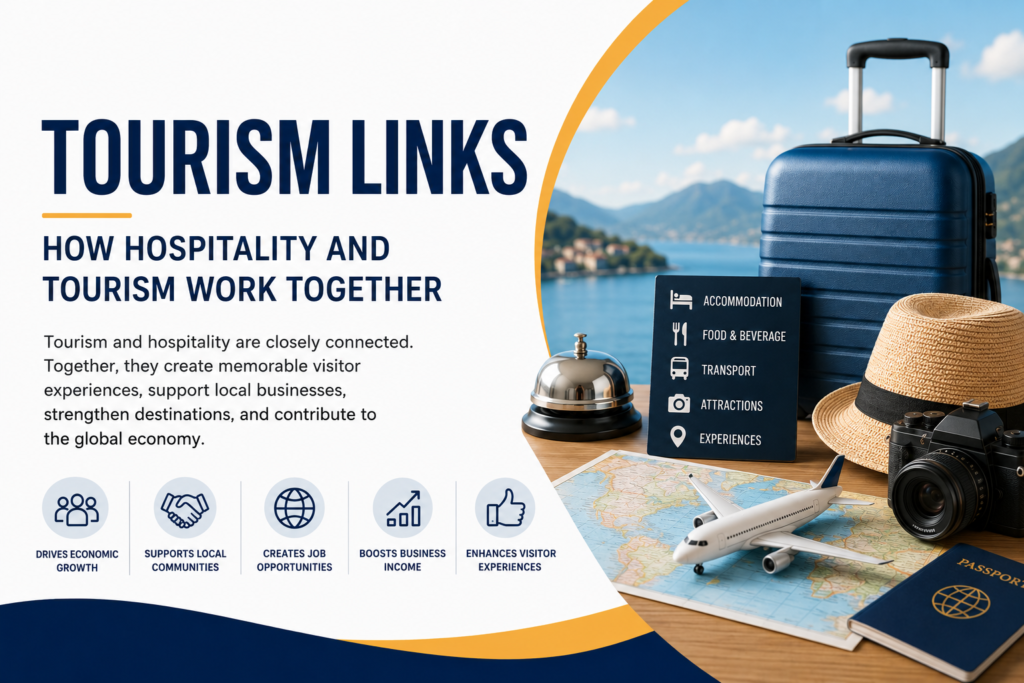
Why Tourism and Hospitality Are Closely Linked
Tourism and hospitality are closely connected because tourists need hospitality services throughout their journey. A visitor does not usually rely on one business alone. Instead, a single trip may involve several different services before, during, and after the visit.
For example, a tourist may use:
- Transport services – Tourists often need flights, trains, taxis, buses, airport transfers, or car hire to reach and move around a destination. Transport services help connect visitors to hotels, attractions, restaurants, events, and local communities. Without reliable transport, tourism activity would be much harder to organise and destinations would be less accessible.
- Accommodation – Hotels, resorts, guest houses, serviced apartments, and hostels provide tourists with places to stay. Accommodation is one of the most important parts of the tourism experience because visitors need safety, comfort, cleanliness, and convenience while away from home.
- Food and beverage services – Restaurants, cafés, bars, catering businesses, and hotel dining facilities support tourists by providing meals, refreshments, and social experiences. Food can also become part of the destination experience, especially when visitors want to try local cuisine and cultural dishes.
- Leisure and attractions – Museums, theme parks, heritage sites, theatres, festivals, sports venues, guided tours, and entertainment facilities give tourists reasons to visit and things to do during their stay. These services add value to the tourist experience and encourage longer visits.
- Travel planning and customer support – Travel agencies, booking platforms, tour operators, visitor information centres, and online customer service teams help tourists plan trips, make reservations, solve problems, and access reliable information.
This shows that tourism brings demand into many parts of the hospitality and service industries. The stronger the tourism sector in a destination, the greater the likely demand for hospitality services.
Tourism Creates Demand for Hospitality Services
One of the most important tourism links is demand. When tourists visit a destination, they spend money on services that support their travel experience. This creates business for hospitality and service providers.
A single tourist journey can support many businesses. For example, an international visitor might book a flight, stay in a hotel, eat at local restaurants, use taxis, visit museums, attend a cultural event, and book a guided tour.
This spending supports:
- Hotels and accommodation providers – More visitors usually increase demand for rooms, conference facilities, holiday packages, and guest services. This can help hotels increase revenue, employ more staff, and invest in improved facilities.
- Restaurants and cafés – Tourists often eat out while travelling, which supports local restaurants, cafés, bars, and food markets. In popular destinations, visitor spending can become a major source of income for food and beverage businesses.
- Transport businesses – Tourism creates demand for airlines, rail services, taxis, coaches, airport transfers, ferries, and car rental companies. These services help tourists move between destinations and access local attractions.
- Attractions and entertainment venues – Tourism increases ticket sales and visitor numbers for museums, galleries, theme parks, theatres, festivals, sporting events, heritage sites, and leisure venues.
- Retail and local services – Tourists may buy souvenirs, clothing, gifts, travel supplies, and local products. This means tourism can also benefit shops, markets, and small local businesses.
Tourism therefore acts as a major driver of hospitality activity. When tourism increases, many hospitality and service businesses are likely to benefit.
Tourism Supports Destination Growth
Tourism links are important because they help destinations grow economically and socially. Popular tourism areas often develop better services and facilities to meet visitor expectations.
Tourism growth may encourage investment in:
- Hotels and resorts – Destinations with rising visitor numbers may see new hotels, renovated accommodation, improved guest facilities, and more varied options for different budgets.
- Restaurants and food experiences – Tourism can encourage the growth of restaurants, cafés, street food markets, food festivals, and local dining experiences. This can make a destination more attractive and memorable.
- Transport and infrastructure – Airports, train stations, roads, public transport systems, signage, parking, and pedestrian areas may be improved when visitor numbers increase.
- Visitor attractions – Museums, heritage sites, parks, beaches, cultural centres, and entertainment venues may receive investment to improve quality, safety, accessibility, and customer experience.
- Public spaces and community facilities – Tourism development can lead to better public areas, cleaner streets, improved lighting, information points, and leisure spaces that benefit both visitors and residents.
These developments can increase the appeal of a destination and encourage repeat visits. They can also support local communities by creating jobs, improving facilities, and increasing business activity.
Cooperation Between Hospitality and Tourism Businesses
Tourism links are not only about customer numbers. They are also about cooperation. Different businesses often work together to create a complete visitor experience.
For example:
- Hotels may partner with local tour guides – This allows guests to book walking tours, sightseeing trips, cultural experiences, or adventure activities directly through their accommodation.
- Restaurants may work with hotels or event venues – Nearby restaurants can benefit from hotel guests, conference visitors, wedding parties, and tourists attending local events.
- Travel agencies may package services together – Flights, hotels, transfers, excursions, and insurance may be combined into one holiday package, making travel easier for customers.
- Attractions may work with transport providers – Shuttle buses, coach services, rail links, or taxi partnerships can help tourists reach attractions more easily.
- Tourism boards may promote local businesses – Destination marketing organisations often promote hotels, restaurants, events, and attractions together to strengthen the image of the destination.
This cooperation improves convenience for tourists. It can also help businesses increase bookings, improve customer satisfaction, and strengthen the overall success of the destination.
Hospitality Shapes Destination Image and Reputation
A tourist’s impression of a destination is shaped by many different hospitality experiences. Visitors do not judge a place only by its attractions. They also remember how they were treated, how easy it was to travel around, where they stayed, what they ate, and whether they felt welcome and safe.
Hospitality services can improve destination reputation through:
- Good accommodation experiences – Clean rooms, friendly staff, comfortable facilities, and efficient service can make visitors more likely to recommend the destination.
- Quality food and drink – Restaurants and cafés can help tourists experience local culture and create positive memories through good service and enjoyable meals.
- Helpful transport services – Reliable taxis, airport transfers, buses, trains, and clear travel information can make a destination easier and less stressful to visit.
- Welcoming customer service – Friendly and professional staff across hotels, restaurants, attractions, and transport services can strongly influence visitor satisfaction.
- Safe and enjoyable attractions – Well-managed attractions, clear information, and good visitor facilities help tourists feel confident and engaged.
Poor service in one area can affect the overall visitor experience. For example, a tourist may enjoy a city’s attractions but feel disappointed if accommodation is poor, transport is confusing, or customer service is unhelpful. This is why hospitality businesses play such an important role in supporting tourism success.
Responding to Changing Tourist Expectations
Tourism links also influence how hospitality businesses develop over time. Modern tourists often expect more than basic services. They may look for convenience, personalisation, cultural experiences, sustainability, and value for money.
Hospitality businesses may respond by offering:
- Digital booking and communication – Many tourists expect to book hotels, restaurants, tickets, tours, and transport online. Businesses that provide easy digital access can improve convenience and attract more customers.
- Personalised experiences – Hotels, restaurants, and tour operators may tailor services to customer preferences, such as special diets, room choices, activity interests, or cultural experiences.
- Local and authentic experiences – Visitors often want to experience local food, traditions, history, and culture. Restaurants may promote local ingredients, while tour operators may offer heritage walks or community-based experiences.
- Sustainable tourism options – Some tourists prefer eco-friendly accommodation, responsible travel activities, low-waste restaurants, and businesses that support local communities.
- Better value and service quality – Tourists compare options online and often look for good reviews, clear pricing, reliable service, and strong customer care.
This shows that tourism trends can shape hospitality business decisions. Businesses that adapt to changing visitor needs are more likely to remain competitive.
Case Study: Heritage City Supported by Tourism and Hospitality
A historic city attracts domestic and international tourists because of its architecture, museums, cultural festivals, and guided walking tours. Visitors come to experience the city’s history, culture, food, and atmosphere.
During their stay, tourists book hotels, dine in local restaurants, use taxis, visit attractions, buy tickets for events, and purchase goods from local shops. This demonstrates tourism links in practice because the visitor experience depends on many connected services.
The city’s tourism success is supported by:
- Accommodation providers – Hotels and guest houses give visitors somewhere comfortable and convenient to stay.
- Restaurants and cafés – Food businesses provide meals and local dining experiences that become part of the trip.
- Transport services – Taxis, buses, rail connections, and walking routes help visitors move around the city.
- Visitor attractions – Museums, cultural sites, festivals, and guided tours provide the main reasons for visiting.
- Local shops and services – Retailers, markets, information centres, and event providers add value to the tourist experience.
This case study shows that tourism and hospitality depend on each other. The city attracts visitors through its tourism appeal, but those visitors need hospitality services to enjoy their stay fully. Hospitality businesses also help shape the city’s reputation, customer satisfaction, and economic value.
Building a Career in Hospitality and Tourism
As tourism and hospitality become increasingly connected, employers need people who understand how visitor services work together. Studying hospitality courses can help learners develop knowledge of tourism operations, customer experience, accommodation, food and beverage, destination management, and service quality.
Hospitality courses can prepare learners for careers in:
- Hotel and accommodation management
- Travel and tourism services
- Restaurant and food service management
- Event and leisure operations
- Tour operations and visitor attractions
- Customer experience and service leadership
For students looking to build a career in this sector, Click College offers Hospitality and Tourism Management programmes designed to develop practical knowledge and career-focused skills.
You can explore Click College’s Hospitality and Tourism Management courses here:
https://clickcollege.com/hospitality-tourism-management
You can also visit the Click College homepage here:
https://clickcollege.com/
Explore Hospitality Courses
Start your journey in hospitality and tourism with an accredited Click College course. Enrol today and build the skills, knowledge, and confidence to progress into a management role.







Recent Posts
Professional Diploma or Higher Qualification Pathway: Which Should You Choose?
Professional Diploma or Higher Qualification Pathway: Which Should You Choose? Choosing the right online qualification is not always simply a question of choosing the longest course or the highest level. For many learners, the better question is: what kind of study route fits my goals right now? Some learners want a focused qualification in one […]
Professional Diploma in Leadership and Management: Course Guide
Professional Diploma in Leadership and Management: Course Guide A Professional Diploma in Leadership and Management is designed for learners who want to develop advanced leadership, strategic thinking and organisational management skills without committing immediately to a full degree programme. Leadership and management are essential in almost every sector. Whether you work in business, education, hospitality, […]
Professional Diploma in Business Management: Who Is It For?
Professional Diploma in Business Management: Who Is It For? A Professional Diploma in Business Management is designed for learners who want to build practical business knowledge without committing immediately to a full degree or long higher education programme. It can be a useful option for people who want to understand how organisations work, how teams […]