Working Together: The Importance of Communication and Coordination
Introduction
In any successful organisation, people must do more than simply complete their individual tasks, they must work together effectively. Communication ensures information is shared clearly and accurately, while coordination ensures activities are organised and aligned towards common goals. When both are strong, teams operate smoothly, productivity improves, and misunderstandings are reduced.
The nature of communication in organisations
Communication is the lifeblood of organisational activity. It shapes how people work together, how decisions are shared and how actions are carried out.
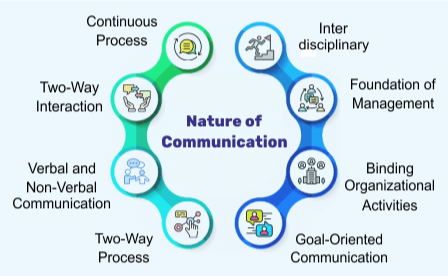
When communication flows well, employees understand what they are doing, why they are doing it and how their work contributes to the organisation’s objectives. When communication fails, confusion, duplication and mistakes can quickly emerge. Communication is not a single event but a continuous process that is embedded in every aspect of organisational life.
In any organisation, communication flows in multiple directions.
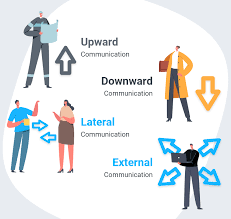
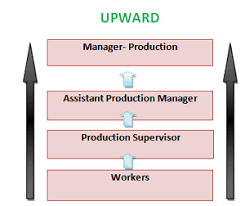
Upward communication allows employees to express concerns, report progress, highlight risks or share feedback with managers.
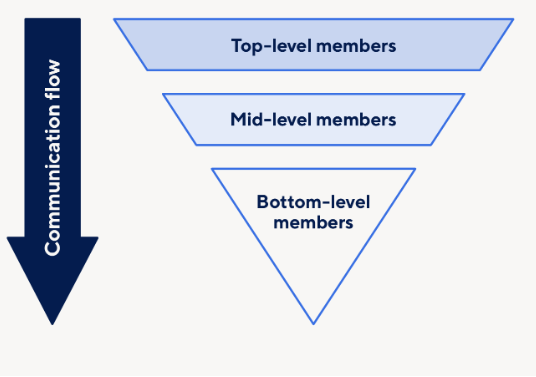
Downward communication enables managers to give instructions, set expectations, provide updates and clarify organisational goals.
Lateral communication occurs between colleagues or teams working at the same level. This type of communication is often essential for problem-solving, collaboration and maintaining good working relationships.
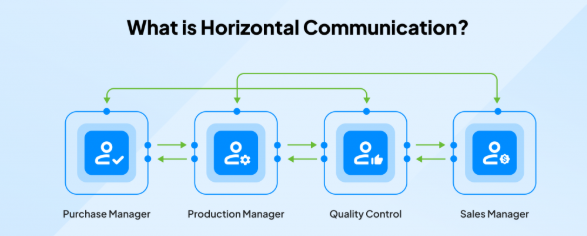
Communication is not simply about passing on information. Messages must be clear, accurate and appropriate to the audience. They must reach the right people in time for them to act on the information.
As organisations grow or become more geographically dispersed, communication becomes more complex. Different teams may develop their own ways of working or use different communication styles.
An organisation’s culture also shapes communication. In a culture that values openness, staff may feel comfortable expressing ideas and concerns. In a culture that is more formal or hierarchical, communication may rely heavily on established procedures or written documentation.
Understanding the nature of communication means recognising that it is not only what is said, but how, when and to whom it is said that matters. The effectiveness of communication influences everything else that happens within an organisation.
Formal and informal communication systems
Organisations depend on a combination of formal and informal communication to function effectively.
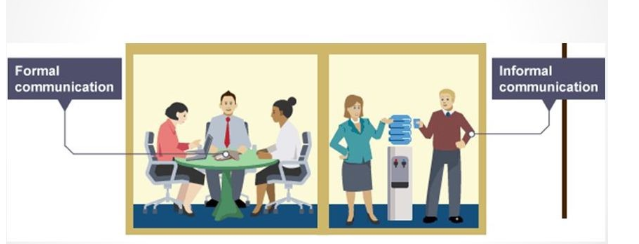
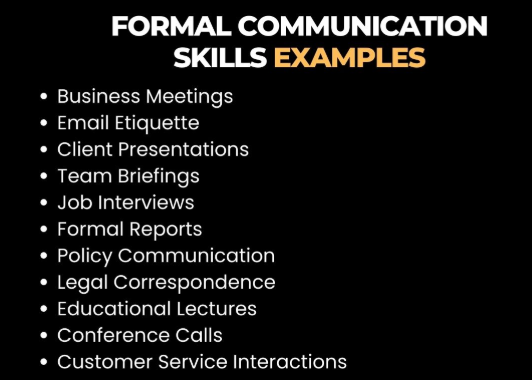
Formal communication includes planned and structured methods such as written reports, scheduled meetings, documented procedures, email briefings, newsletters, policy documents and official announcements. These systems provide clarity and consistency. They also create evidence of what information has been shared, which is important for accountability, regulatory compliance and organisational memory.
Informal communication happens naturally through day-to-day interactions, such as conversations between colleagues, instant messages, telephone calls or chance discussions. Informal communication can be highly efficient because it allows problems to be resolved quickly or ideas to be shared without needing formal approval. It also helps to build trust, support teamwork and strengthen relationships.
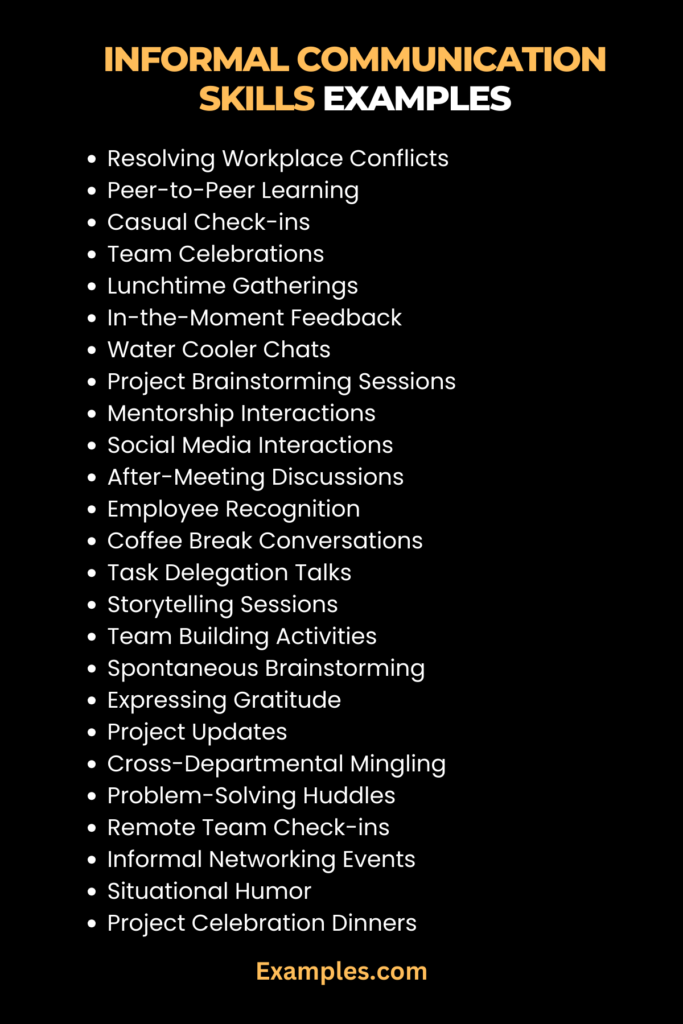
However, informal communication can have limitations. Messages passed informally may not reach everyone who needs them. When important information is not recorded, misunderstandings may occur. There is also a risk that rumours or incorrect information spread easily. Effective organisations seek a balance between formal systems, which ensure reliability, and informal systems, which encourage speed and personal connection. You, as the student, should recognise that neither system alone is sufficient; they work best together.
Digital tools, remote work and modern communication
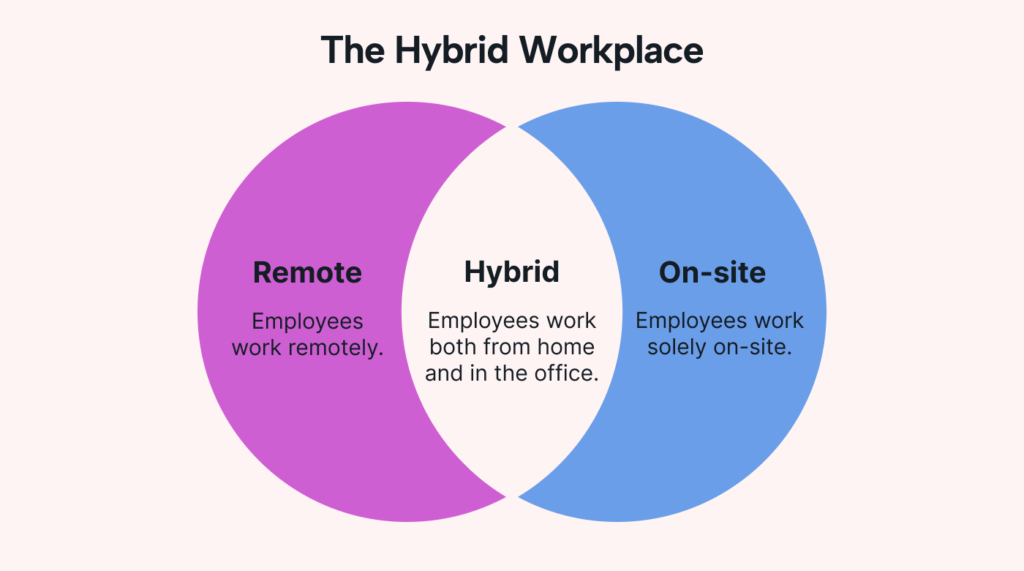
Modern organisations increasingly rely on digital communication tools. Email, shared drives, intranets, dashboards, messaging apps, video conferencing and collaboration platforms allow staff to work together across different locations and time zones. These tools support hybrid and remote working, provide instant access to information and enable teams to coordinate activities even when they are not physically together.
Digital communication offers many advantages. It can speed up information sharing, improve transparency and make documentation easier. Teams can collaborate on documents in real time, track project progress through digital dashboards or communicate quickly through messaging platforms. These tools also create opportunities for global collaboration and help organisations operate more efficiently.
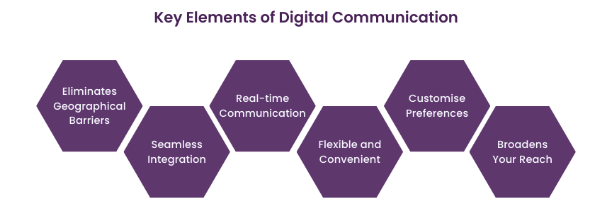
However, digital communication also presents challenges. Employees may experience information overload due to constant notifications. Important messages can be lost among large volumes of emails or posts. Different teams may use different platforms, creating fragmentation. Misunderstandings may occur when tone is unclear in written messages. The success of digital communication therefore depends on organisational guidelines, shared expectations and thoughtful use.
The rise of remote and hybrid work has made communication even more crucial. Without face-to-face contact, teams must work harder to maintain clarity, check understanding and preserve strong working relationships. Organisations that handle digital communication well can achieve high levels of coordination and flexibility.
Coordination across departments and teams
Coordination refers to aligning the work of different people, teams and departments so that activities fit together smoothly. Most organisational tasks are interdependent. A marketing campaign may require support from finance, design, operations and customer service. Launching a new product may involve contributions from research and development, procurement, manufacturing, sales and IT. Coordination ensures that these efforts happen in the right order, at the right pace and with the right resources.
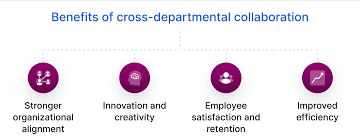
Coordination takes many forms. It may involve scheduled cross-departmental meetings where updates are shared, decisions are made and priorities are adjusted. It may occur through project teams that bring together staff from several functions. Workflow systems, shared databases and standard operating procedures can also support coordination by outlining exactly how work should progress from one step to the next. In some cases, organisations appoint coordination roles such as project managers, team leaders or liaison officers whose main responsibility is to ensure that people work together effectively.
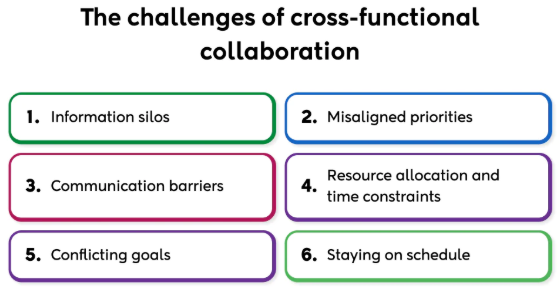
Effective coordination relies heavily on communication. Teams must share information about progress, risks, resource needs and deadlines. They must understand how their work affects others. When coordination breaks down, delays, confusion and conflict may result. Work may be duplicated or important steps overlooked. Poor coordination often causes frustration for staff and dissatisfaction for customers.
Understanding coordination helps you see how the different parts of an organisation come together to achieve larger objectives. It highlights that good communication is not only desirable but essential for organisational success.
The impact of structure on communication and coordination
Organisational structure plays a significant role in shaping how communication and coordination occur. A hierarchical structure with many layers of management may slow communication because messages pass through several levels. In contrast, a flatter structure may allow information to move more quickly, but it may also require staff to take greater responsibility for managing communication themselves.
Functional structures may encourage strong communication within departments but may create barriers between them. Staff may become experts within their own function but find it difficult to collaborate across departmental boundaries. Divisional structures, which group employees by product or region, may improve communication within divisions but make it harder to coordinate across the organisation as a whole. Matrix structures, which bring together employees from different departments into project teams, can improve cross-functional communication but require careful management to avoid confusion from dual reporting lines.
The structure chosen by an organisation influences not only who communicates with whom, but also how decisions are made, how quickly organisations can respond to change and how well teams work together. Organisations often adjust their structures, introduce new communication tools or create cross-functional teams to improve coordination and adapt to changing circumstances. Understanding this relationship between structure, communication and coordination helps explain why organisations reorganise themselves and how structural design supports organisational performance.
Interested in our Business Courses?
Click College offers a wide range of fully online accredited business management courses and qualifications to suit different academic backgrounds and career goals. Our programmes range from short 40 credit Professional Diplomasthrough to the 360 credit International Graduate Diploma, which is academically comparable to a bachelor’s degree. All courses are open access and available to learners worldwide.
With courses available in business management, marketing, finance, HR, hospitality & tourism and project management, Click College provides flexible learning pathways to support professional development, career progression or further study.
All Courses
Explore our courses and find a qualification that fits your goals and your schedule.
First Year of Undergraduate (Level 4 – 120 Credits)
The Higher International Certificate courses are accredited and delivered at Level 4 of the UK FHEQ framework, making them academically comparable to the first year of undergraduate study.
Years One and Two of Undergraduate (Level 5 – 240 Credits)
The Higher International Diploma courses are accredited and available with 240 Credits at Level 5 of the UK FHEQ framework, making it academically comparable to a Foundation Degree (UK) or an Associate Degree (US).
Degree-Comparable International Graduate Diploma (Level 6 – 360 Credits)
The International Graduate Diploma is accredited and delivered at Level 6 of the UK FHEQ framework. With 360 credits, it is academically comparable to a UK bachelor’s degree in terms of level and credit







Recent Posts
Professional Diploma or Higher Qualification Pathway: Which Should You Choose?
Professional Diploma or Higher Qualification Pathway: Which Should You Choose? Choosing the right online qualification is not always simply a question of choosing the longest course or the highest level. For many learners, the better question is: what kind of study route fits my goals right now? Some learners want a focused qualification in one […]
Professional Diploma in Leadership and Management: Course Guide
Professional Diploma in Leadership and Management: Course Guide A Professional Diploma in Leadership and Management is designed for learners who want to develop advanced leadership, strategic thinking and organisational management skills without committing immediately to a full degree programme. Leadership and management are essential in almost every sector. Whether you work in business, education, hospitality, […]
Professional Diploma in Business Management: Who Is It For?
Professional Diploma in Business Management: Who Is It For? A Professional Diploma in Business Management is designed for learners who want to build practical business knowledge without committing immediately to a full degree or long higher education programme. It can be a useful option for people who want to understand how organisations work, how teams […]