Best Online Hospitality and Tourism Management Courses in the UK
A Complete Guide to Flexible, Accredited Hospitality and Tourism Qualifications
The hospitality and tourism industry offers career opportunities across hotels, resorts, restaurants, travel businesses, visitor attractions, event organisations, cruise companies, destination management organisations and service-based enterprises. It is a broad, international and fast-moving sector where customer experience, operational efficiency and commercial performance all matter.

For many people, hospitality and tourism careers begin in practical, customer-facing roles. A learner may start in hotel reception, food and beverage service, travel sales, guest services, reservations, events, tourism support or front-of-house operations. Over time, many professionals want to move beyond operational delivery into supervision, management or strategic leadership.
That is where hospitality and tourism management qualifications can make a real difference.
A good qualification helps learners understand not only how hospitality and tourism organisations operate, but also how they are planned, managed, marketed and developed. It can support progression into roles involving people management, customer experience, service quality, revenue performance, tourism planning, destination management and strategic decision-making.
For learners who cannot attend a traditional university, online hospitality and tourism management courses provide a flexible alternative. They allow students to study from home, continue working, manage family commitments and build recognised qualifications at their own pace.
This guide explains the best online hospitality and tourism management courses available through Click College, including the main Level 4, Level 5 and Level 6 qualification pathway, as well as shorter 40-credit Professional Diplomas for more focused career development.
Why Study Hospitality and Tourism Management?
Hospitality and tourism are built around people, service and experience. However, successful organisations in these sectors require much more than friendly customer service. They need managers who can lead teams, control operations, understand customers, manage resources, respond to demand, protect service quality and support long-term business performance.
Hospitality and tourism management courses help learners develop knowledge in areas such as:
- Hospitality operations
- Tourism and travel services
- Customer experience
- Service quality
- Destination management
- Hotel management
- Hospitality revenue management
- Marketing and promotion
- Leadership and people management
- Strategic decision-making
- Business performance
- Innovation and change
These areas are relevant across a wide range of organisations. A learner who studies hospitality and tourism management may apply their knowledge in hotels, restaurants, resorts, visitor attractions, travel agencies, tour operators, event venues, cruise operations, leisure organisations or tourism development bodies.
The value of studying hospitality and tourism management is that it combines industry-specific knowledge with broader business management skills. This means learners are not restricted to one narrow role. Instead, they can build transferable capabilities that support progression across the wider service economy.
For example, customer experience management is relevant in hotels, airlines, visitor attractions and travel services. Revenue management is valuable in hotels, resorts and accommodation businesses. Destination management is important for tourism organisations and local visitor economies. Leadership and operations management are useful across almost every hospitality and service environment.
This makes hospitality and tourism management a strong choice for learners who want a career-focused qualification with broad professional relevance.
Why Online Hospitality and Tourism Courses Are Becoming Popular
Online learning is especially well suited to hospitality and tourism learners because many people in the sector work irregular hours. Hospitality and tourism professionals may work evenings, weekends, shift patterns, seasonal schedules or variable rotas. This can make fixed classroom attendance difficult.
Online study solves many of these problems.
Instead of attending scheduled classes, learners can access course materials digitally and work through them when it suits them. This means they can fit study around employment, family responsibilities and other commitments.
For working adults, this flexibility is often the difference between being able to study and not being able to study at all.

Online hospitality and tourism management courses are also useful for international learners. Hospitality and tourism are global industries, and many students want qualifications that can be studied from anywhere. A fully online course allows learners to access structured higher education without needing to relocate or travel to a campus.
Another major benefit is that online learning allows students to apply ideas directly to their own professional context. A hotel supervisor studying operations management may immediately relate course concepts to front-office procedures, guest service processes or room occupancy. A tourism professional studying destination management may connect learning to visitor flows, attractions, local partnerships or tourism development.
This practical connection between study and work can make online learning highly effective for career development.
What Makes a Good Online Hospitality and Tourism Management Course?
Before choosing an online course, learners should look carefully at what the qualification offers. The best online hospitality and tourism management courses should provide academic credibility, career relevance and a clear pathway for progression.
Accreditation
Accreditation matters because it provides assurance that a qualification has been reviewed against recognised academic standards. Learners should look for courses that are externally accredited or awarded by recognised awarding organisations.
Accreditation is especially important for learners who may later wish to progress to higher-level study, strengthen their CV or demonstrate formal academic achievement to employers.
Qualification Level
A good course should clearly state its level. This helps learners understand whether the course is introductory, intermediate, advanced or degree-level.
For hospitality and tourism learners, Levels 4, 5 and 6 are especially important because they broadly align with university-level study. Level 4 introduces higher education learning, Level 5 develops more advanced management knowledge, and Level 6 focuses on strategic and degree-level capability.
Credit Value
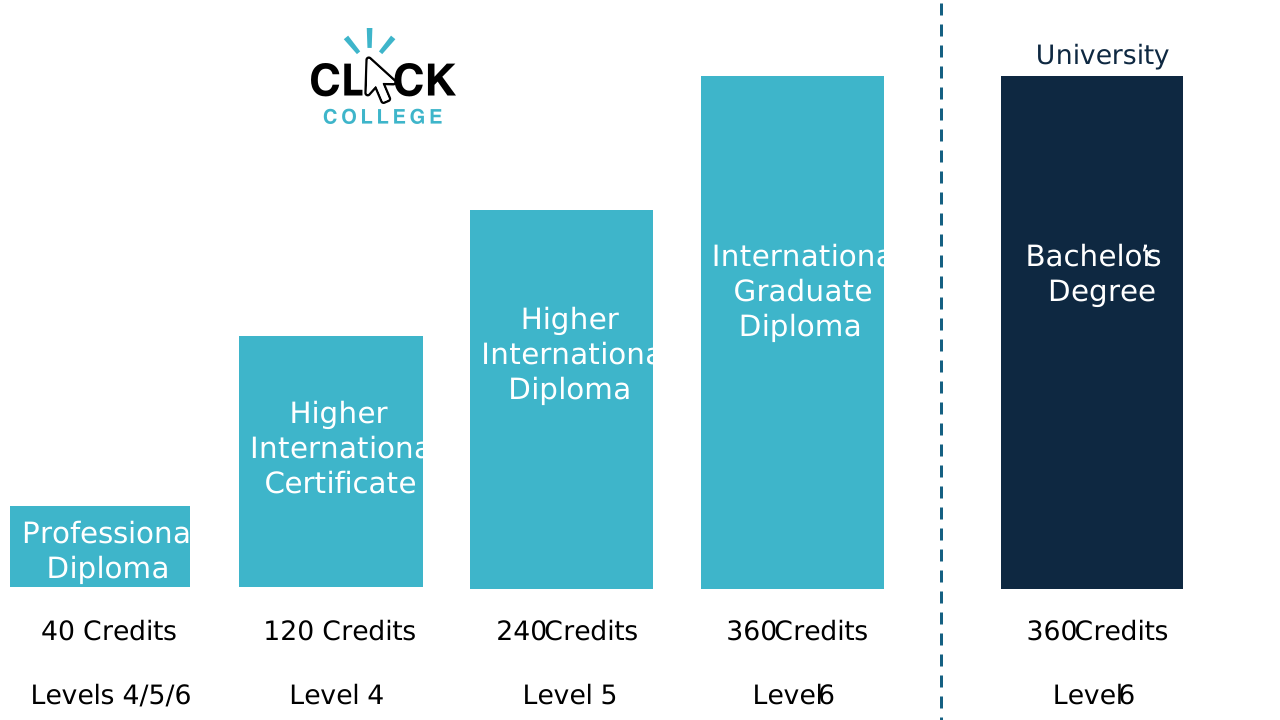
Credit value shows the size of the qualification. A 40-credit Professional Diploma is shorter and more focused, while 120, 240 and 360-credit qualifications provide larger and more comprehensive study routes.
Understanding credits helps learners choose between short professional development and a full progression pathway.
Flexibility
For many learners, flexibility is essential. A strong online course should allow students to study at their own pace, without unnecessary restrictions from fixed classes, exam timetables or rigid academic terms.
Assessment Method
Some learners prefer coursework-based qualifications because they allow understanding to be demonstrated through written assignments and applied tasks rather than timed examinations.
This can be particularly suitable for adult learners, working professionals and those who want to show how theory applies to real hospitality and tourism situations.
Progression Opportunities
The best course providers offer more than isolated qualifications. They provide pathways that allow learners to move from one level to the next.
This is one of the strengths of the Click College Hospitality and Tourism Management route. Learners can start with a short 40-credit Professional Diploma or follow a structured pathway through Level 4, Level 5 and Level 6.
Understanding Level 4, Level 5 and Level 6 Hospitality and Tourism Qualifications
When comparing online hospitality and tourism management courses in the UK, learners often see references to Level 4, Level 5 and Level 6. These levels are important because they help explain the academic stage of the qualification.
Level 4
Level 4 is usually the first stage of higher education study. It introduces learners to core concepts and helps build the academic and professional foundations needed for further study.
In hospitality and tourism, Level 4 may include topics such as customer service, tourism principles, business management, marketing fundamentals, hospitality operations and the structure of service-based organisations.
Level 4 can be a good starting point for learners who are new to higher education, returning to study or entering hospitality and tourism management for the first time.
Level 5
Level 5 builds on Level 4 and develops a deeper, more applied understanding of management. It is suited to learners who want to strengthen supervisory, operational and middle-management capability.
In hospitality and tourism, Level 5 may include hospitality operations management, tourism destination management, people management, service quality, business performance and organisational decision-making.
Level 5 is often suitable for learners who already have some work experience or who want to progress into more responsible roles.
Level 6
Level 6 is degree-level study. It focuses on advanced analysis, strategic thinking and leadership. Learners at this level are expected to engage with more complex management issues and make informed decisions in organisational contexts.
In hospitality and tourism, Level 6 may include strategic hospitality management, competitive advantage, innovation, change leadership, business research and senior-level decision-making.
Level 6 is suitable for learners who want degree-level knowledge, senior management capability or a stronger platform for postgraduate progression.
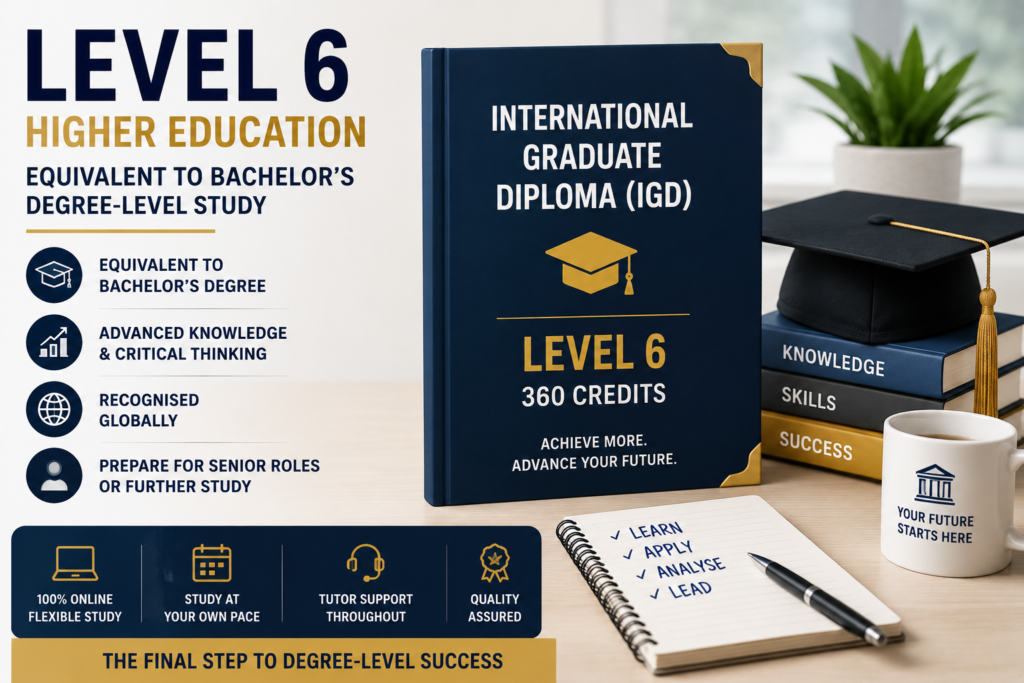
>> Read more about qualification levels in our article here: UK Qualification Levels Explained: Level 4, Level 5 and Level 6
Understanding Credits: 40, 120, 240 and 360 Credits Explained
Credit values help learners understand the size of a qualification. They do not simply indicate difficulty; they show the amount of learning attached to the qualification.
At Click College, the Hospitality and Tourism Management portfolio includes both short 40-credit Professional Diplomas and larger pathway qualifications worth 120, 240 and 360 credits.
40-Credit Professional Diplomas
A 40-credit Professional Diploma is a short, focused qualification. It is ideal for learners who want targeted knowledge in a specific subject area, such as hotel management, tourism management, hospitality revenue management or strategic hospitality management.
These diplomas are useful for continuing professional development, career enhancement or as a stepping stone into larger qualifications.
A learner might choose a 40-credit diploma because they want to develop a specific skill area without committing immediately to a full 120, 240 or 360-credit route.
120-Credit Higher International Certificate
A 120-credit qualification is more substantial. It provides a full stage of structured higher education learning.
The Higher International Certificate in Hospitality & Tourism Management (EduQual Level 4) gives learners a broad foundation in the sector and supports progression to Level 5.
240-Credit Higher International Diploma
A 240-credit qualification represents a larger body of study. It normally includes Level 4 and Level 5 learning and provides more advanced management development.
The Higher International Diploma in Hospitality & Tourism Management (EduQual Level 5) is suited to learners who want a stronger and broader qualification than a short diploma.
360-Credit International Graduate Diploma
A 360-credit qualification represents a full degree-level learning pathway. It provides the most comprehensive option in the Click College Hospitality and Tourism Management route.
The International Graduate Diploma in Hospitality & Tourism Management (Level 6) is designed for learners seeking advanced management capability and degree-level study through a flexible online route.
> Read more about qualification credits in our article here: CATS and ECTS Credits Explained: What Do 40, 120, 240 and 360 Credits Mean?
The Main Hospitality and Tourism Management Pathway at Click College
Click College offers three main Hospitality and Tourism Management qualifications. These provide a structured route from Level 4 to Level 6.
The three main qualifications are:
- Higher International Certificate in Hospitality & Tourism Management (EduQual Level 4) — 120 credits
- Higher International Diploma in Hospitality & Tourism Management (EduQual Level 5) — 240 credits
- International Graduate Diploma in Hospitality & Tourism Management (Level 6) — 360 credits
Together, these qualifications create a clear pathway for learners who want to build towards degree-level hospitality and tourism management study online.
Higher International Certificate in Hospitality & Tourism Management (EduQual Level 4) — 120 Credits
The Higher International Certificate in Hospitality & Tourism Management is a Level 4 qualification worth 120 credits.
This qualification is designed for learners who want a strong foundation in hospitality, tourism and management. It is particularly suitable for those who are new to higher education, changing career direction or seeking a recognised starting point for future progression.
Level 4 study helps learners build confidence with academic concepts while developing practical knowledge of hospitality and tourism organisations. It introduces the key ideas that underpin service operations, customer experience, business management and tourism activity.
This qualification may be suitable for:
- New entrants to hospitality or tourism
- Learners returning to education
- Professionals seeking formal recognition of knowledge
- Career changers
- Learners planning to progress to Level 5 study
- Individuals who want a structured alternative to the first year of university-style study
The Higher International Certificate provides more depth than a short course because it carries 120 credits. This makes it a substantial starting point for learners who want to build a meaningful qualification in the subject area.
Students may study topics linked to business, tourism, hospitality operations, customer service, marketing, people management and organisational understanding. These areas help learners understand how hospitality and tourism businesses function and what managers need to consider when delivering effective service.
For many learners, the Level 4 Higher International Certificate is the best starting point because it provides a broad foundation without assuming extensive previous academic experience.
Higher International Diploma in Hospitality & Tourism Management (EduQual Level 5) — 240 Credits
The Higher International Diploma in Hospitality & Tourism Management is a Level 5 qualification worth 240 credits.
This qualification builds on Level 4 study and develops more advanced knowledge of hospitality and tourism management. It is suitable for learners who want to progress beyond introductory study and move towards supervisory, operational or management-level understanding.
Level 5 study is more applied and analytical. Learners are expected to explore not only what happens within hospitality and tourism organisations, but also why decisions are made and how management practice affects performance.
This qualification may be suitable for:
- Hospitality supervisors seeking management progression
- Tourism professionals wanting broader business knowledge
- Learners who have completed Level 4 study
- Existing managers who want a recognised qualification
- Individuals seeking a substantial online alternative to the first two years of undergraduate study
- Learners planning to progress to Level 6
The Higher International Diploma can help learners develop knowledge in areas such as hospitality operations management, tourism destination management, service quality, leadership, organisational behaviour, marketing and business performance.
This makes it valuable for people who want to move from operational delivery into more responsible roles. For example, a learner working in a hotel may use the qualification to understand how different departments contribute to guest experience and commercial performance. A learner in tourism may use it to understand destination development, visitor management and tourism planning.
Because the qualification is worth 240 credits, it offers significantly more depth than a short professional diploma. It is therefore a strong choice for learners who want a broad and credible management qualification in hospitality and tourism.
International Graduate Diploma in Hospitality & Tourism Management (Level 6) — 360 Credits
The International Graduate Diploma in Hospitality & Tourism Management is a Level 6 qualification worth 360 credits.
This is the most comprehensive qualification in the Click College Hospitality and Tourism Management pathway. It is designed for learners who want degree-level study and advanced management capability through a flexible online model.
Level 6 study focuses on strategic decision-making, leadership, analysis and organisational performance. Learners are expected to think beyond day-to-day operations and consider how hospitality and tourism organisations compete, adapt and grow.
This qualification may be suitable for:
- Hospitality managers
- Tourism managers
- Department heads
- Senior supervisors
- Business owners
- Learners seeking degree-level knowledge
- Professionals wanting to strengthen strategic leadership skills
- Learners planning postgraduate or further professional study
The International Graduate Diploma may include advanced topics such as strategic management, competitive advantage, strategic hospitality management, revenue management, hospitality finance, innovation, change leadership and applied research.
This qualification is particularly useful for learners who want to develop from operational management into strategic leadership. It can support the development of higher-level thinking, including how to analyse business environments, evaluate competitive position, manage change and make decisions that affect long-term organisational success.
For learners who want a flexible online alternative to traditional university study, the International Graduate Diploma provides a structured, degree-level route in Hospitality and Tourism Management.
Shorter 40-Credit Professional Diplomas in Hospitality and Tourism
Not every learner wants to start with a large qualification. Some people want a shorter course that focuses on a specific professional area.
Click College offers six 40-credit Professional Diplomas in Hospitality and Tourism-related areas. These qualifications are useful for learners who want targeted development, CPD, career enhancement or a stepping stone into a larger qualification.
The six Professional Diplomas are:
- Professional Diploma in Tourism Management (EduQual Level 5)
- Professional Diploma in Hospitality Management (EduQual Level 5)
- Professional Diploma in Strategic Hospitality Management (Level 6)
- Professional Diploma in Hotel Management (Level 5)
- Professional Diploma in Tourism and Travel (EduQual Level 4)
- Professional Diploma in Hospitality Revenue Management (EduQual Level 5)
Each one is more focused than the main 120, 240 and 360-credit qualifications. This makes them attractive for learners who have a clear area of interest or who want to develop a specific skill set quickly.
Furthermore, the credits achieved from any of the 40-credit Professional Diplomas can be used as advanced credit to transfer in to any of the higher 120/240/360 courses above.
Professional Diploma in Tourism and Travel (EduQual Level 4) — 40 Credits
The Professional Diploma in Tourism and Travel is a Level 4 qualification designed for learners who want an introduction to the travel and tourism sector.
It is particularly relevant for those interested in travel services, tourism support, visitor experiences and customer-facing tourism roles. Learners may use this qualification to develop knowledge of how tourism services are organised and how travel-related businesses support customers before, during and after their journeys.
This diploma may be suitable for:
- Travel consultants
- Tourism assistants
- Visitor attraction staff
- Customer service staff in travel or tourism
- Reservations or bookings staff
- Learners considering a tourism career
- Individuals planning to progress into higher-level hospitality and tourism study
The course, which is open-access, can help learners understand the structure of tourism services, the importance of customer experience and the role of tourism businesses within the wider visitor economy.
As a 40-credit qualification, it provides a focused and accessible introduction without requiring learners to commit immediately to a full 120-credit pathway.
Professional Diploma in Hospitality Management (EduQual Level 5) — 40 Credits
The Professional Diploma in Hospitality Management is a Level 5 qualification designed for learners who want to strengthen their knowledge of hospitality operations and service management.
Hospitality management involves planning and controlling the delivery of services in customer-focused environments. It includes managing teams, maintaining standards, improving service quality and ensuring that operations run efficiently.
This diploma may be suitable for:
- Hospitality supervisors
- Front-of-house staff seeking progression
- Service managers
- Restaurant or venue supervisors
- Hotel or accommodation staff
- Learners using the qualification for CPD
- Professionals considering a larger hospitality and tourism qualification
The course is valuable for learners who want a focused introduction to management issues in hospitality without enrolling immediately on a larger qualification.
It is particularly relevant for people working in hotels, restaurants, venues, resorts or service organisations where guest satisfaction and operational performance are closely connected.
Professional Diploma in Tourism Management (EduQual Level 5) — 40 Credits
The Professional Diploma in Tourism Management is a Level 5 qualification focused on the management of tourism activities, destinations and visitor experiences.
Tourism management requires an understanding of how destinations attract visitors, how tourism services are coordinated and how visitor experiences are developed. It also involves considering the needs of local communities, tourism businesses, customers and stakeholders.
This diploma may be suitable for:
- Tourism professionals
- Destination management staff
- Visitor attraction employees
- Travel and tourism supervisors
- Tourism development assistants
- Learners interested in tourism planning
- Individuals seeking focused Level 5 tourism knowledge
The course can help learners understand tourism as both a business activity and a destination-based system. It is useful for those who want to develop management knowledge relevant to attractions, tourism organisations, travel businesses and destination development.
As a 40-credit qualification, it offers a shorter route into tourism management study and can also support progression into larger hospitality and tourism qualifications.
Professional Diploma in Hotel Management (Level 5) — 40 Credits
The Professional Diploma in Hotel Management is a Level 5 qualification designed for learners who want to focus specifically on hotel and accommodation management.
Hotels are complex operations. They involve front office, housekeeping, reservations, guest services, food and beverage, maintenance, revenue management, events and customer experience. Managers must coordinate these areas to deliver consistent service while maintaining commercial performance.
This diploma may be suitable for:
- Hotel supervisors
- Front office staff
- Reservations staff
- Accommodation managers
- Guest services staff
- Aspiring hotel managers
- Learners interested in hotel operations
The course can help learners develop understanding of how hotels operate and how managers contribute to guest satisfaction, service quality and business success.
It is a strong choice for learners whose career goals are specifically linked to hotels, accommodation providers, resorts or serviced accommodation businesses.
Professional Diploma in Hospitality Revenue Management (EduQual Level 5) — 40 Credits
The Professional Diploma in Hospitality Revenue Management is a Level 5 qualification focused on pricing, demand and commercial performance in hospitality.
Revenue management is especially important in hotels and accommodation businesses because many hospitality products are perishable. An unsold hotel room for tonight cannot be stored and sold tomorrow. This means managers must make informed decisions about pricing, occupancy, demand, booking patterns and customer behaviour.
This diploma may be suitable for:
- Hotel revenue staff
- Reservations managers
- Accommodation managers
- Hospitality supervisors
- Commercial managers
- Hotel managers
- Learners interested in pricing and profitability
The course can help learners understand how revenue management supports profitability and business performance. It is especially useful for those who want to specialise in the commercial side of hospitality.
For learners already working in hotels or accommodation businesses, this diploma can provide focused knowledge that is directly relevant to real operational decisions.
Professional Diploma in Strategic Hospitality Management (Level 6) — 40 Credits
The Professional Diploma in Strategic Hospitality Management is a Level 6 qualification designed for learners who want to develop advanced hospitality leadership and strategic management capability.
Strategic hospitality management is concerned with long-term direction, competitive advantage, organisational performance and leadership. It goes beyond daily operations and asks how hospitality organisations can adapt, improve and succeed in changing markets.
This diploma may be suitable for:
- Hospitality managers
- Department heads
- Senior supervisors
- Business owners
- Aspiring senior leaders
- Learners seeking Level 6 study
- Professionals wanting focused strategic development
The course is particularly relevant for learners who already understand hospitality operations and now want to develop higher-level thinking. It can support progression into senior management by strengthening strategic awareness, leadership capability and decision-making.
As a 40-credit Level 6 diploma, it is a focused option for learners who want advanced professional development without committing immediately to the full 360-credit International Graduate Diploma.
Hospitality Management vs Tourism Management: What Is the Difference?
Many learners search for hospitality and tourism management courses without being fully sure how hospitality management and tourism management differ.
The two areas are closely related, but they are not identical.
Hospitality management focuses mainly on managing service environments where customers or guests receive direct support, care and experience. This includes hotels, restaurants, resorts, venues, accommodation providers and service-based businesses.
Tourism management focuses more on travel, destinations, visitor experiences, attractions, tour operations and the wider systems that support people when they travel away from home.
In simple terms:
- Hospitality management focuses on guest service and service operations.
- Tourism management focuses on travel, destinations and visitor activity.
- Hospitality and tourism management brings both areas together.
A hotel manager may focus on rooms, guest services, staff, operations and revenue. A tourism manager may focus on visitor attractions, destination development, tourism marketing or travel services. A hospitality and tourism manager may need to understand both the service experience and the wider visitor economy.
For learners who want a broad qualification, the Higher International Certificate, Higher International Diploma or International Graduate Diploma in Hospitality & Tourism Management may be the best route.
For learners with a more specific career goal, a Professional Diploma in Hotel Management, Hospitality Management, Tourism Management, Tourism and Travel, Hospitality Revenue Management or Strategic Hospitality Management may be more appropriate.
Level 4 vs Level 5 vs Level 6: Which Course Level Is Right for You?
Choosing the right qualification level is one of the most important decisions a learner can make.
There is no single correct answer. The best course depends on your previous education, work experience, confidence, career goals and how much study you want to complete.
Choose Level 4 if you are building foundations
Level 4 is usually the best choice if you are new to higher education or want a structured introduction to hospitality and tourism management.
You may choose Level 4 if:
- You are entering the industry
- You are changing career
- You want an accessible starting point
- You want to build confidence before Level 5
- You want a foundation in hospitality and tourism
- You prefer not to begin with advanced strategic study
The Higher International Certificate in Hospitality & Tourism Management is the main 120-credit Level 4 pathway. The Professional Diploma in Travel and Tourism is a shorter 40-credit Level 4 option.
Choose Level 5 if you want management development
Level 5 is suitable for learners who want to develop more applied management knowledge. It is often appropriate for people who already have some work experience or who want to move into supervisory or management roles.
You may choose Level 5 if:
- You already work in hospitality or tourism
- You want to progress into management
- You want to strengthen operational knowledge
- You want a qualification with more depth than Level 4
- You are interested in hotel, tourism, hospitality or revenue management
- You want to progress later to Level 6
The Higher International Diploma in Hospitality & Tourism Management is the main 240-credit Level 5 pathway. This course is open-access because it includes the 120 credits of Level 4 units with an additional 120 credits at Level 5. The Professional Diplomas in Hospitality Management, Tourism Management, Hotel Management and Hospitality Revenue Management are shorter 40-credit Level 5 options.
Choose Level 6 if you want strategic and degree-level study
Level 6 is the best choice for learners who want advanced management knowledge. It is particularly relevant to people aiming for senior roles, strategic responsibilities or degree-level achievement.
You may choose Level 6 if:
- You are aiming for senior management
- You want to develop strategic leadership skills
- You already have management experience
- You want degree-level learning
- You are interested in competitive advantage and organisational performance
- You want to strengthen your professional profile
The International Graduate Diploma in Hospitality & Tourism Management is the main 360-credit Level 6 route. This is also an open access course because it incorporates 120 credits at Level 4 plus 120 Credits at Level 5 plus a further 120 Credits at Level 6. The Professional Diploma in Strategic Hospitality Management is the shorter 40-credit Level 6 option.
Which Hospitality and Tourism Course Should You Choose?
The table below provides a simple guide.
| Your Goal | Recommended Course |
|---|---|
| Start a broad hospitality and tourism pathway | Higher International Certificate in Hospitality & Tourism Management |
| Build towards Level 5 management knowledge | Higher International Diploma in Hospitality & Tourism Management |
| Gain degree-level hospitality and tourism management knowledge | International Graduate Diploma in Hospitality & Tourism Management |
| Study a short introduction to travel and tourism | Professional Diploma in Tourism and Travel |
| Focus on hospitality operations and service management | Professional Diploma in Hospitality Management |
| Focus on tourism businesses and destinations | Professional Diploma in Tourism Management |
| Build hotel management knowledge | Professional Diploma in Hotel Management |
| Specialise in pricing, occupancy and revenue | Professional Diploma in Hospitality Revenue Management |
| Develop strategic hospitality leadership | Professional Diploma in Strategic Hospitality Management |
A learner who wants the most complete route should consider the 120, 240 and 360-credit pathway. A learner who wants a shorter, focused qualification should consider one of the 40-credit Professional Diplomas.
Career Paths in Hospitality and Tourism Management
Hospitality and tourism qualifications can support a wide range of career paths. The exact role a learner can pursue will depend on their previous experience, qualification level, location, employer and professional goals.
Possible career areas include:
- Hotel management
- Resort management
- Guest services
- Front office management
- Accommodation management
- Hospitality operations
- Food and beverage management
- Tourism management
- Destination management
- Travel services
- Visitor attractions
- Events and visitor experience
- Revenue management
- Reservations and yield management
- Service quality management
- Hospitality entrepreneurship
A Level 4 learner may be preparing for entry-level or junior supervisory opportunities. A Level 5 learner may be developing the knowledge needed for operational or middle-management roles. A Level 6 learner may be preparing for senior management, business ownership, consultancy, postgraduate study or strategic leadership.
Hospitality and tourism careers are often highly practical. Employers may value experience, attitude, communication skills and customer focus alongside formal qualifications. However, recognised qualifications can help learners demonstrate commitment, strengthen their CV and develop the management knowledge needed to progress.
For example, a learner working in front office may use a hotel management qualification to move towards front office supervision or accommodation management. A learner working in reservations may use revenue management study to move towards pricing or commercial roles. A learner working in tourism support may use tourism management study to move towards destination development or visitor experience management.
The key benefit of studying hospitality and tourism management is that it provides a broader understanding of how organisations operate, not just how individual tasks are performed.
Why Study Hospitality and Tourism with Click College?
Click College provides a flexible online route for learners who want recognised hospitality and tourism management qualifications without the restrictions of traditional campus-based study.
The main benefits include:
100% Online Study
All learning is delivered online, allowing students to study from anywhere with an internet connection. This is ideal for UK learners, international learners and working professionals.
Flexible, Self-Paced Learning
Learners can study around work, family and personal commitments. This flexibility is especially useful in hospitality and tourism, where work patterns are often irregular.
No Exams
Assessment is coursework-based. This allows learners to demonstrate understanding through written assignments rather than timed examinations.
Open-Access Entry
Click College offers open-access routes, making study more accessible for learners who may not have traditional academic entry qualifications.
Multiple Qualification Sizes
Learners can choose between short 40-credit Professional Diplomas and larger 120, 240 and 360-credit qualifications.
Clear Progression Pathway
The main Hospitality and Tourism Management pathway supports progression from Level 4 to Level 5 and then to Level 6.
Career-Focused Study
The qualifications are designed around management, leadership and applied knowledge relevant to hospitality and tourism organisations.
Suitable for Working Adults
The online, asynchronous structure makes these courses especially suitable for learners balancing study with employment or other responsibilities.
How to Use This Article to Choose Your Course
If you are still unsure which qualification is right for you, start by asking three questions.
1. Do I want a short course or a full pathway?
If you want focused professional development, choose a 40-credit Professional Diploma.
If you want a larger qualification and long-term progression, consider the Higher International Certificate, Higher International Diploma or International Graduate Diploma.
2. What level is right for me?
Choose Level 4 if you want a foundation.
Choose Level 5 if you want applied management development.
Choose Level 6 if you want strategic, degree-level study.
Note that all of Click College courses are open-access, and so any one can enrol. Therefore, the decision on Level is based on what Level do you want as your graduation point?
3. What career direction interests me most?
Choose Hotel Management if you want to work in hotels or accommodation.
Choose Tourism Management if you are interested in destinations, visitor attractions or tourism organisations.
Choose Hospitality Revenue Management if you want to focus on pricing, occupancy and commercial performance.
Choose Strategic Hospitality Management if you want advanced leadership and strategic management knowledge.
Choose the broader Hospitality & Tourism Management pathway if you want the most comprehensive route.
Frequently Asked Questions
What is the best online hospitality and tourism management course in the UK?
The best course depends on your goals. If you want a complete pathway, the Higher International Certificate, Higher International Diploma and International Graduate Diploma in Hospitality & Tourism Management provide structured progression from Level 4 to Level 6. If you want a shorter specialist course, a 40-credit Professional Diploma may be more suitable.
Can I study hospitality and tourism management online?
Yes. Click College offers online hospitality and tourism management courses that can be studied flexibly from anywhere. This makes them suitable for learners who are working, travelling, caring for family members or managing other commitments.
Are online hospitality and tourism qualifications worth it?
They can be highly worthwhile if you choose a recognised, accredited qualification that supports your goals. Online study can help you build management knowledge, strengthen your CV and progress without needing to attend a physical campus.
What is the difference between hospitality management and tourism management?
Hospitality management focuses on service operations and guest experience in settings such as hotels, restaurants, venues and resorts. Tourism management focuses on travel, destinations, attractions and visitor activity. Hospitality and tourism management combines both areas.
What is a Level 4 hospitality and tourism qualification?
A Level 4 qualification provides a foundation in higher education study. It is suitable for learners who are beginning their management journey or want an accessible introduction to hospitality and tourism.
What is a Level 5 hospitality and tourism qualification?
A Level 5 qualification develops more advanced and applied management knowledge. It is suitable for learners seeking supervisory, operational or middle-management progression.
What is a Level 6 hospitality and tourism qualification?
A Level 6 qualification is degree-level study. It focuses on strategic management, leadership and advanced decision-making. It is suitable for learners seeking senior management capability or degree-level knowledge.
What does 40 credits mean?
A 40-credit qualification is a shorter, focused course. It is useful for CPD, specialist development or as a stepping stone into a larger qualification.
What does 360 credits mean?
A 360-credit qualification represents a full degree-level learning pathway. At Click College, the International Graduate Diploma in Hospitality & Tourism Management carries 360 credits.
Can I study while working full-time?
Yes. The flexible online format is designed to support learners who are working full-time or managing other commitments.
Are there exams?
Click College courses are assessed through coursework rather than traditional examinations.
Which course should I choose if I want to become a hotel manager?
The Professional Diploma in Hotel Management is a focused option for hotel-related career goals. Learners seeking a broader pathway may also consider the Higher International Certificate, Higher International Diploma or International Graduate Diploma in Hospitality & Tourism Management.
Which course should I choose if I want to work in tourism?
The Professional Diploma in Tourism and Travel is a good introductory option at Level 4, while the Professional Diploma in Tourism Management offers focused Level 5 tourism management study. The broader Hospitality & Tourism Management pathway is suitable for learners wanting a more comprehensive qualification.
Which course should I choose if I want to specialise in hotel revenue?
The Professional Diploma in Hospitality Revenue Management is designed for learners interested in pricing, occupancy, demand and commercial performance in hospitality.
Explore Online Hospitality and Tourism Management Courses
Choosing the right hospitality and tourism management course depends on your current experience, career ambitions and preferred level of study.
If you want a complete progression pathway, Click College offers:
- Higher International Certificate in Hospitality & Tourism Management (EduQual Level 4) — 120 credits
- Higher International Diploma in Hospitality & Tourism Management (EduQual Level 5) — 240 credits
- International Graduate Diploma in Hospitality & Tourism Management (Level 6) — 360 credits
If you want a shorter specialist qualification, Click College also offers 40-credit Professional Diplomas in:
- Tourism and Travel
- Hospitality Management
- Tourism Management
- Hotel Management
- Hospitality Revenue Management
- Strategic Hospitality Management
Whether your goal is to enter the industry, move into management, specialise in hotel revenue, strengthen tourism expertise or build degree-level strategic capability, online study provides a flexible route towards your next step.
Explore the full Hospitality & Tourism Management course range here:
Ready to enrol?
Take Your Next Step Today
Ready to advance your professional management career with an accredited, flexible qualification? Visit Click College to explore their comprehensive online courses or discover detailed information about their range of qualifications.
For further enquiries or to enrol today, visit the Click College website and begin your journey toward professional excellence.




Recent Posts
Level 4 Business Management Courses: 40 or 120 Credits
Level 4 Business Management Courses: 40 or 120 Credits Click College offers two Level 4 Business Management courses: a focused 40-credit Professional Diploma and a broader 120-credit Higher International Certificate. The Professional Diploma suits learners seeking a shorter introduction or targeted professional development. The Higher International Certificate suits those seeking a more comprehensive foundation in […]
What Are Management Accounts? How Internal Reports Support Better Decisions
What Are Management Accounts? How Internal Reports Support Better Decisions They usually combine financial information—such as sales, costs, profit and cash flow—with operational measures that explain the numbers. A useful management-accounting report does not simply state that profit fell or costs increased. It helps managers understand why, decide what to investigate and identify possible action. […]
Why a Profitable Business Can Still Have a Loss-Making Product or Department
Why a Profitable Business Can Still Have a Loss-Making Product or Department A business can make a healthy overall profit while one of its products, departments, locations or projects makes a loss. This is not a contradiction. Overall profit combines the results of many different activities. A profitable product line may generate enough contribution to […]