Understanding Intangibility in the Hospitality Industry: Why Experience Matters More Than Products
When people think about hospitality, they often picture hotel rooms, restaurants, or travel experiences. But unlike many other industries, hospitality is not primarily about physical products—it’s about experiences. One of the most important characteristics that defines this sector is intangibility, a concept that shapes how services are delivered, marketed, and perceived by customers.
What Is Intangibility in Hospitality?
Intangibility means that a service cannot be physically touched, stored, or tested before purchase. In hospitality, customers are not simply buying a product—they are buying an experience.
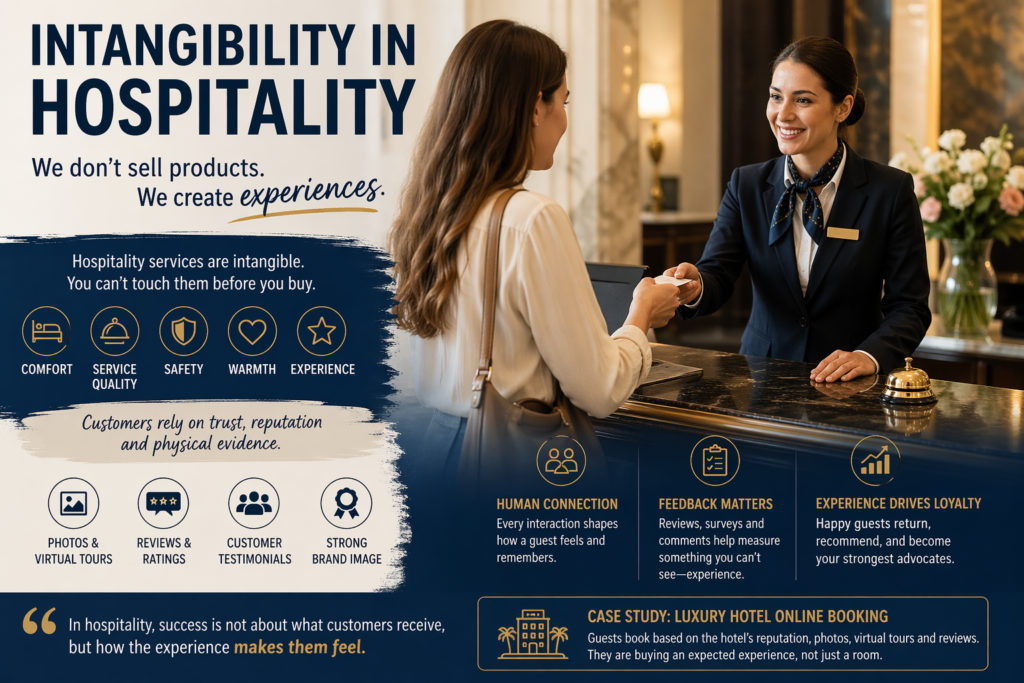
For example, when a guest books a hotel room, they are not just paying for a bed or a building. They are also paying for:
- Comfort and cleanliness
- Atmosphere and ambience
- Quality of service
- Safety and security
- The feeling of being welcomed
Unlike buying a phone or clothing item, customers cannot fully inspect these elements in advance. This makes hospitality fundamentally different from product-based industries.
Why Trust and Reputation Are So Important
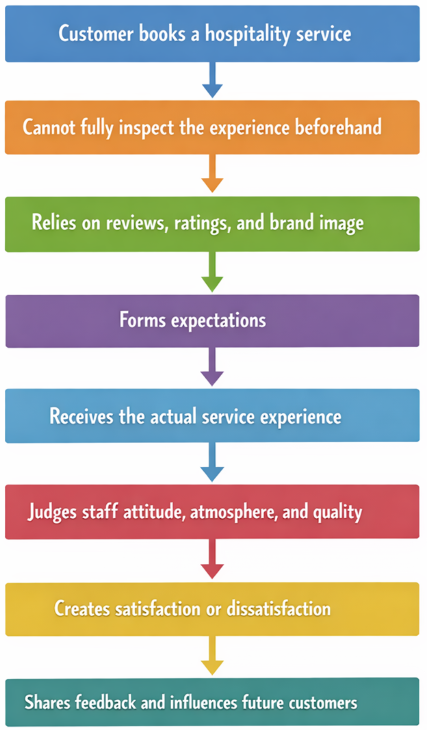
Because services are intangible, customers rely heavily on indirect signals when making decisions. These include:
- Online reviews and ratings
- Photographs and videos
- Brand reputation
- Recommendations and past experiences
A strong reputation becomes a powerful asset. In many cases, customers are willing to pay more for a hotel or restaurant simply because they trust the experience will meet their expectations.
Making the Invisible Visible
Hospitality businesses face a unique challenge: how do you sell something that customers cannot fully see before buying?
The answer lies in creating physical evidence that represents the service experience. This might include:
- Well-designed interiors and décor
- Professional staff uniforms
- Clean and inviting environments
- High-quality websites and booking platforms
- Customer testimonials and visual content
For instance, a fine dining restaurant might use elegant table settings and refined branding to signal quality before a single dish is served. Similarly, hotels often use virtual tours, guest photos, and strong online ratings to build confidence.
These visible elements help customers imagine the experience, reducing uncertainty and increasing trust.
The Human Factor: Why Experiences Feel Different
Another key aspect of intangibility is that hospitality experiences are highly personal.
Two guests may stay in the same room or eat the same meal, yet describe their experiences very differently. Why? Because service is shaped by:
- Human interaction
- Emotions and expectations
- Staff behaviour and communication
A warm welcome, a friendly smile, or quick problem resolution can significantly enhance a guest’s perception. On the other hand, poor service—even in a high-quality setting—can negatively impact the overall experience.
This highlights a critical point: hospitality is not just about what customers receive, but how they feel.
Implications for Management and Marketing
Understanding intangibility has major implications for how hospitality businesses operate.
1. Staff Training Is Essential
Every interaction between staff and customers contributes to the overall experience. Businesses must invest in:
- Communication skills
- Customer service training
- Empathy and professionalism
2. Customer Feedback Drives Improvement
Since service quality cannot be measured purely through physical features, feedback becomes crucial. Businesses rely on:
- Online reviews
- Guest surveys and comment cards
- Social media engagement
- Repeat bookings
3. Branding and Image Matter
A strong brand helps reduce uncertainty and builds trust. Consistency in service delivery and messaging is key to maintaining a positive reputation.
Case Study: Selling the Experience Before It Happens
Consider a luxury hotel in Dubai that promotes its rooms through:
- High-quality photography
- Virtual tours
- Customer testimonials
- Strong online ratings
Before arriving, guests cannot test the service, staff friendliness, or atmosphere. Instead, they make decisions based on perception and expectation.
This is a clear example of intangibility in action. The hotel must rely on branding and presentation to make its service appear trustworthy and desirable—despite the fact that the actual experience has not yet been delivered.
Final Thoughts
Intangibility is one of the defining features of the hospitality and service industries. It shifts the focus away from physical products and places it firmly on customer experience, perception, and emotion.
Businesses that understand this are more likely to succeed because they:
- Invest in service quality and staff training
- Build strong reputations and brand identities
- Use physical evidence to support intangible promises
In hospitality, success is not just about what customers receive—it’s about how the experience makes them feel.
I’m Ready to Move up to Management…
Enrol today on to a Hospitality and Tourism Course and Start Your Journey to a Management Role.







Recent Posts
Professional Diploma or Higher Qualification Pathway: Which Should You Choose?
Professional Diploma or Higher Qualification Pathway: Which Should You Choose? Choosing the right online qualification is not always simply a question of choosing the longest course or the highest level. For many learners, the better question is: what kind of study route fits my goals right now? Some learners want a focused qualification in one […]
Professional Diploma in Leadership and Management: Course Guide
Professional Diploma in Leadership and Management: Course Guide A Professional Diploma in Leadership and Management is designed for learners who want to develop advanced leadership, strategic thinking and organisational management skills without committing immediately to a full degree programme. Leadership and management are essential in almost every sector. Whether you work in business, education, hospitality, […]
Professional Diploma in Business Management: Who Is It For?
Professional Diploma in Business Management: Who Is It For? A Professional Diploma in Business Management is designed for learners who want to build practical business knowledge without committing immediately to a full degree or long higher education programme. It can be a useful option for people who want to understand how organisations work, how teams […]