PESTLE Analysis: Key External Factors That Affect Organisations
Introduction
Every organisation operates within a wider external environment that shapes its decisions, behaviour and long-term direction. While managers can control internal factors such as staff, processes and resources, they have very little control over external forces. These forces can create opportunities, new markets, new technologies, supportive regulation, or significant threats, such as economic downturns, political instability or rapid shifts in consumer expectations.
Because the external environment is broad and complex, organisations require a structured way to analyse and understand it. One of the most widely used tools for this purpose is PESTLE analysis, which examines Political, Economic, Social, Technological, Legal and Environmental influences. Using this framework helps organisations anticipate change, reduce risk, and develop strategies that are realistic and responsive to future developments.
The Purpose of PESTLE Analysis
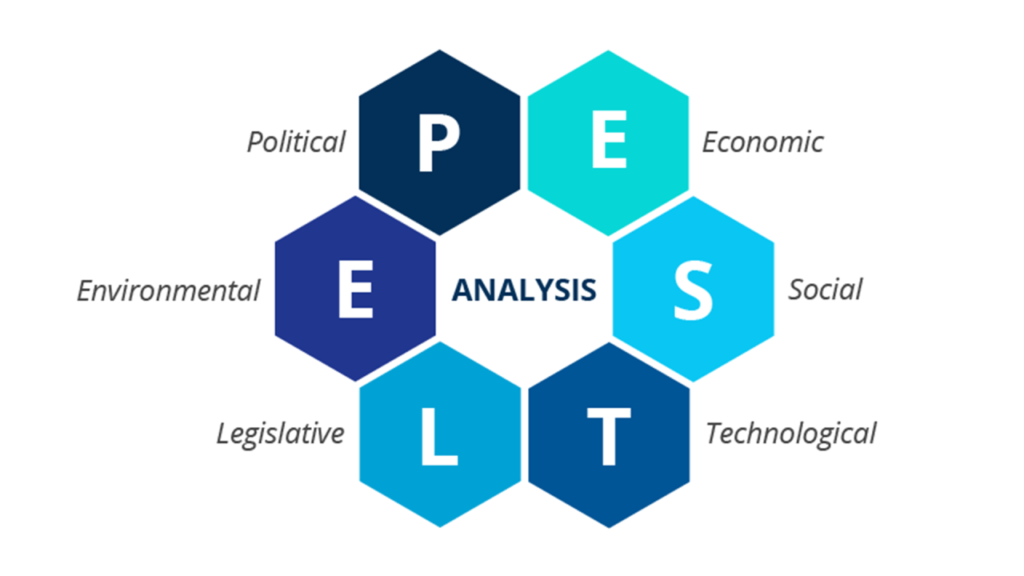
The PESTLE framework helps organisations scan the “big picture” influences that surround them. It encourages managers to look beyond internal priorities and consider how the wider environment is shifting. For example, political decisions can reshape regulatory duties, economic conditions influence spending power, and technological innovations can transform service delivery overnight. Social attitudes may redefine what customers expect from businesses, while environmental and legal changes increasingly require organisations to act responsibly and sustainably.
By working through each PESTLE dimension, organisations develop a clearer understanding of the pressures and opportunities they are likely to face. This insight allows managers to adapt strategy, allocate resources more effectively, and plan for different future scenarios.
Understanding the external environment is essential for organisations because it enables them to recognise the opportunities and threats that exist beyond their internal operations. The PESTLE framework supports this by guiding managers through six categories of external factors: Political, Economic, Social, Technological, Legal and Environmental. Analysing these dimensions helps organisations prepare for change, adapt their strategy, and protect themselves from potential risks.
How to Conduct a PESTLE Analysis
- Define the scope – decide whether you are analysing an entire industry, an individual organisation, or a specific market segment.
- Gather information – consult reliable sources including government reports, economic forecasts, industry publications, and research bodies.
- Identify changes and trends – determine what is shifting and consider how quickly these changes are emerging.
- Evaluate impact – judge the potential effect of each factor, classifying it as high, medium or low in terms of influence.
- Determine whether each factor represents a threat or an opportunity – link findings to wider strategic tools such as SWOT.
- Prioritise and review regularly – external environments evolve, meaning organisations must revisit their PESTLE analysis frequently.
Interconnected Nature of PESTLE Factors
The six PESTLE elements rarely operate independently; instead, they often influence one another in ways that shape organisational behaviour. Technological developments, for example, frequently lead to new legal frameworks, as seen in the introduction of regulations surrounding data protection and artificial intelligence. Social attitudes toward sustainability can increase environmental pressures on organisations, encouraging them to reduce emissions and adopt greener practices. Economic conditions may also drive political responses, such as tax adjustments or government intervention during periods of financial instability. Understanding these interconnections allows organisations to anticipate the broader implications of external changes rather than examining each factor in isolation.
International and Global Considerations
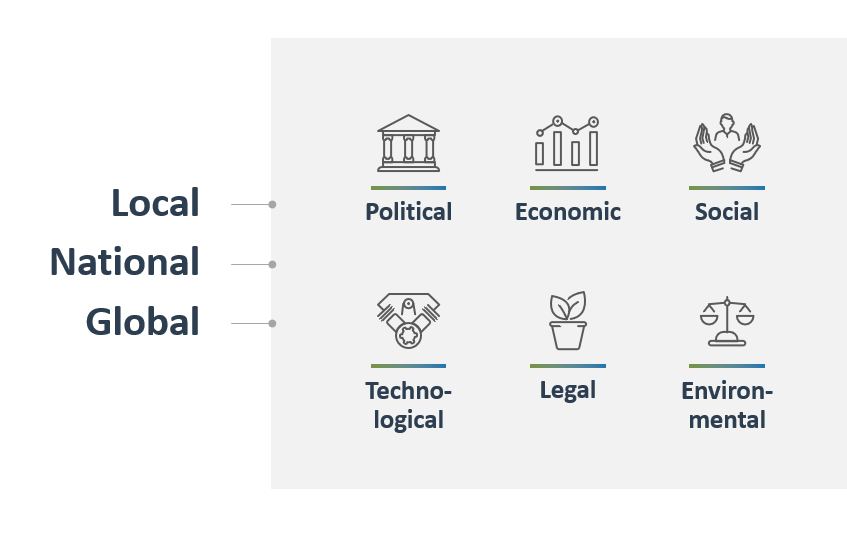
Modern organisations increasingly operate in global environments, where external influences extend far beyond national boundaries. Multinational companies must be aware that political and legal conditions vary significantly between countries, often requiring separate PESTLE analyses for each region. Global supply chains introduce additional challenges, as geopolitical tensions, tariffs, and international trade agreements can directly affect access to materials and overall cost structures. Environmental factors such as climate change also have global implications, impacting transport routes, agricultural production, and resource availability. Recognising these wider international dynamics helps organisations manage risk and remain competitive on a global stage.
Political Factors
Political influences arise from government decisions, public policy and the broader political climate. These may include taxation policies, funding priorities, trade agreements, national industrial strategies, and levels of political stability. Political decisions often determine the “rules of the game” within which all organisations must operate.
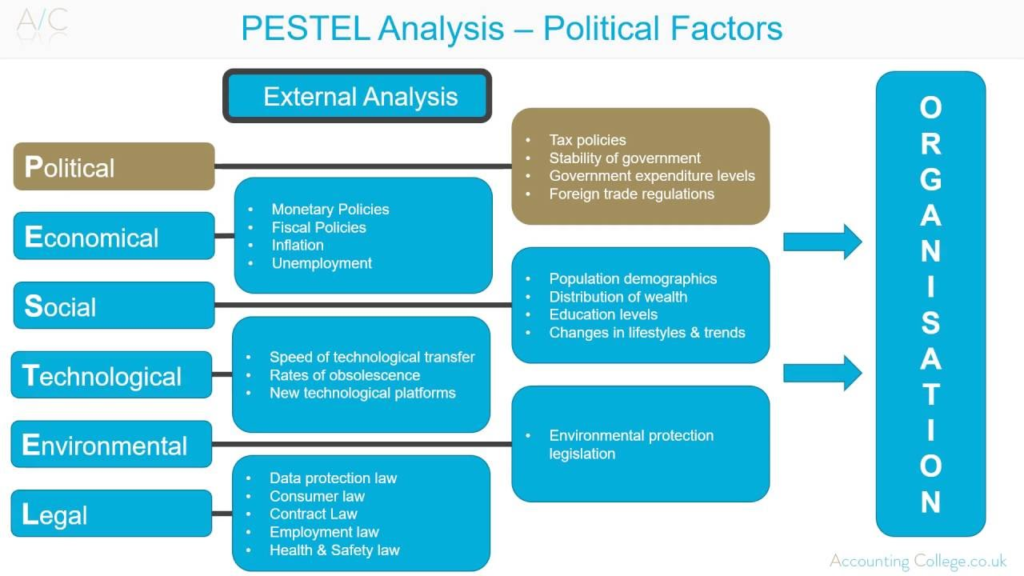
For example, a change in taxation may directly affect organisational costs, while new trade agreements might open or restrict access to certain markets. Government priorities, such as investment in green technologies or digital infrastructure, can create opportunities for some industries and challenges for others. Political stability also matters: organisations tend to invest more confidently when political conditions are predictable and consistent.
Political factors are important because they influence long-term planning. A business that anticipates upcoming regulatory change, such as shifts in employment law or health and safety requirements, is far better placed to adapt than one that reacts only once the change arrives.
Economic Factors
Economic factors refer to the overall health and performance of the economy in which organisations operate. These include inflation, interest rates, employment levels, consumer confidence, exchange rates and economic growth. Economic conditions affect both household spending power and organisational costs.
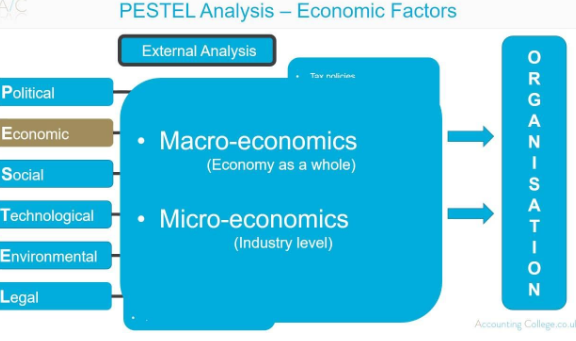
When inflation rises or wages stagnate, consumers may reduce their spending on non-essential goods and services. This can lead to increased competition among organisations and the need to adjust pricing strategies. Economic downturns often force businesses to cut costs, delay expansion plans or shift towards value-focused products. On the other hand, periods of economic growth can increase customer demand, encourage investment and support innovation.
The economic environment also influences access to finance. When interest rates rise, borrowing becomes more expensive, which can limit organisational investment. Exchange rate movements may also have significant implications for companies that import materials or export products.
Understanding economic trends allows organisations to prepare for potential fluctuations in demand, manage financial risks and make informed strategic decisions.
Social Factors
Social factors capture the attitudes, behaviours and demographic characteristics of the population. These include age distribution, lifestyle trends, cultural values, education levels, health awareness, family structures, and expectations around work–life balance.
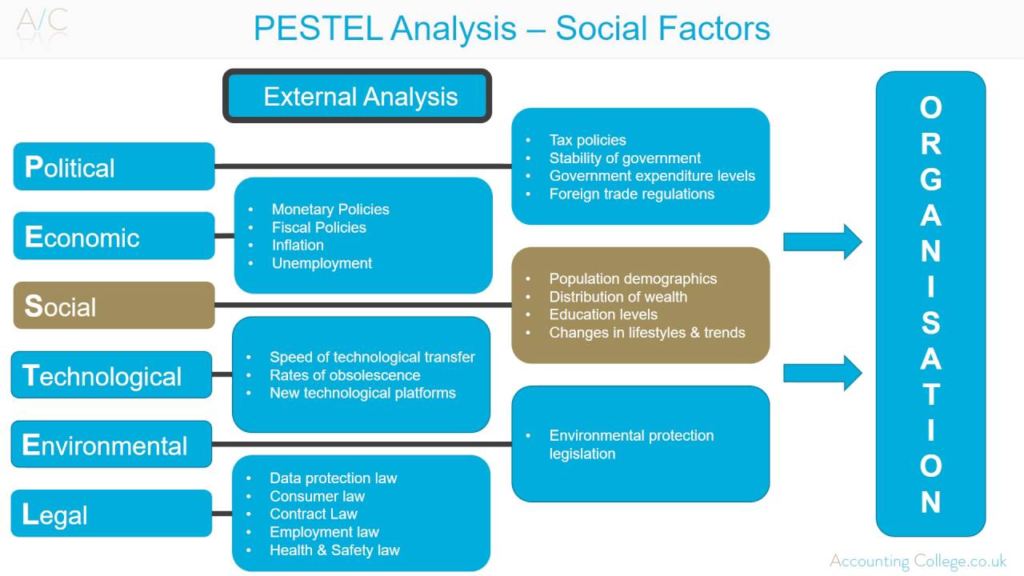
Social change often has direct implications for what customers value. An ageing population, for example, increases demand for healthcare, assistive technologies and age-friendly services, while a young, digitally literate population tends to favour online access, convenience and immediate communication.
Lifestyle changes also influence organisational behaviour. In recent years, growing awareness of health, sustainability and ethical consumption has encouraged businesses to reduce plastic waste, improve product transparency and introduce healthier or environmentally responsible product ranges. Social expectations around diversity, equality and workplace wellbeing increasingly shape organisational policies and branding.
By monitoring social trends, organisations can better understand shifting customer preferences, anticipate demand for new products and ensure they remain relevant in a changing society.
Technological Factors
Technological factors describe the impact of innovation and technological development on organisations. Rapid technological change can dramatically alter how industries operate, how products are created, and how customers interact with services.
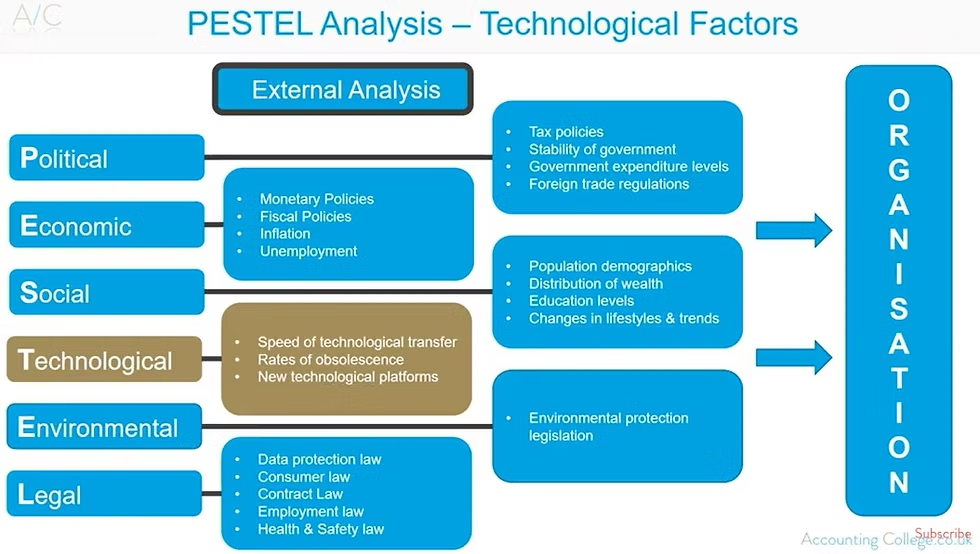
Digital transformation, for instance, has reshaped retail, education, finance and entertainment. Online shopping, mobile banking, e-learning platforms, AI-powered services and advanced data analytics have all become standard features of modern business environments. Organisations that embrace these changes can deliver faster, more personalised services, streamline processes and reach wider audiences.
Technology also affects internal operations. Automation and robotics can improve efficiency and reduce labour costs, while cloud computing enables remote working and flexible collaboration across global teams. However, technological change also brings risks, particularly relating to cyber security, data protection and the cost of keeping systems up to date.
Organisations must remain aware of technological trends because failing to adapt can quickly lead to loss of competitiveness, while early adopters often gain strategic advantage.
Environmental Factors
Environmental factors relate to the natural world and ecological considerations. Organisations increasingly face pressure to operate sustainably, minimise their environmental footprint, and contribute to climate-change mitigation. Environmental influences include climate change, extreme weather events, resource availability, waste management, pollution, carbon emission targets, and the environmental expectations of consumers and regulators.
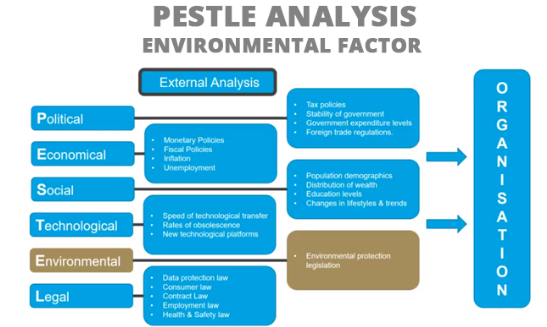
As societies become more environmentally conscious, organisations must demonstrate responsibility through sustainable sourcing, reduced energy consumption, lower emissions, recyclable packaging and ethical supply chains. Environmental regulation also continues to strengthen, meaning that organisations must comply with more demanding standards.
Environmental factors affect not only reputation but also long-term business viability. For example, climate-related disruptions to agriculture, transport or global supply chains can significantly impact production, pricing and distribution.
Legal Factors
Legal factors refer to the laws and regulations that organisations must follow. These include employment legislation, health and safety requirements, consumer protection rules, data protection laws, equality legislation, and industry-specific compliance obligations.
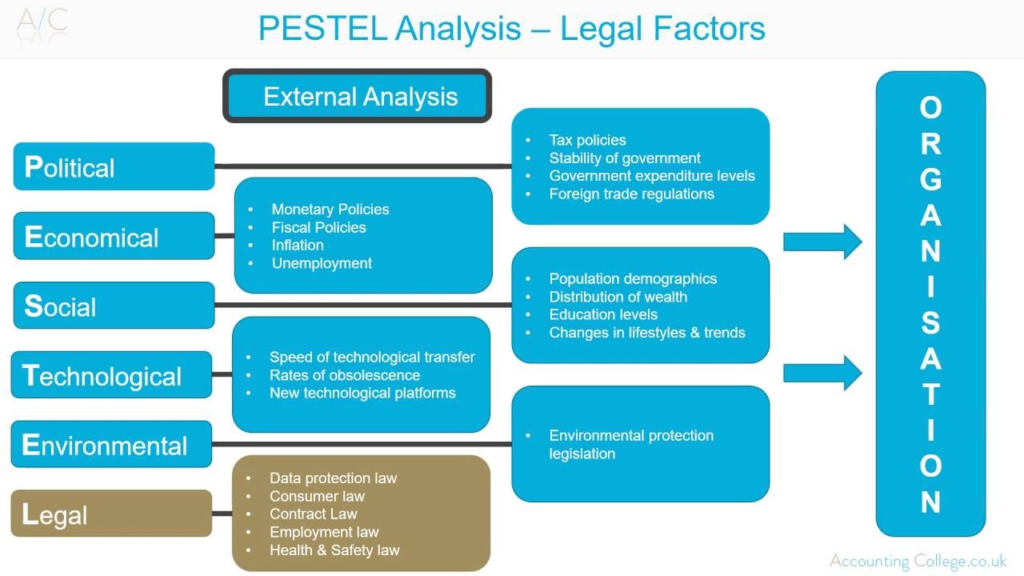
Legal change is often closely connected to political decision-making, but the legal environment focuses on the detailed requirements that organisations must address in day-to-day operations. For example, employment laws govern working hours, pay, contracts and workplace conditions. Consumer protection legislation ensures that goods are safe, services are fair, and information provided to customers is accurate. Data protection laws such as the UK GDPR set strict rules for collecting, storing and using personal information.
Legal factors matter because non-compliance can lead to fines, court action, reputational damage and even closure. Organisations must therefore monitor legal developments and ensure that policies, processes and training remain up to date.
Interested in our Business Courses?
Click College offers a wide range of fully online accredited business management courses and qualifications to suit different academic backgrounds and career goals. Our programmes range from short 40 credit Professional Diplomasthrough to the 360 credit International Graduate Diploma, which is academically comparable to a bachelor’s degree. All courses are open access and available to learners worldwide.
With courses available in business management, marketing, finance, HR, hospitality & tourism and project management, Click College provides flexible learning pathways to support professional development, career progression or further study.
All Courses
Explore our courses and find a qualification that fits your goals and your schedule.
First Year of Undergraduate (Level 4 – 120 Credits)
The Higher International Certificate courses are accredited and delivered at Level 4 of the UK FHEQ framework, making them academically comparable to the first year of undergraduate study.
Years One and Two of Undergraduate (Level 5 – 240 Credits)
The Higher International Diploma courses are accredited and available with 240 Credits at Level 5 of the UK FHEQ framework, making it academically comparable to a Foundation Degree (UK) or an Associate Degree (US).
Degree-Comparable International Graduate Diploma (Level 6 – 360 Credits)
The International Graduate Diploma is accredited and delivered at Level 6 of the UK FHEQ framework. With 360 credits, it is academically comparable to a UK bachelor’s degree in terms of level and credit value







Recent Posts
Professional Diploma or Higher Qualification Pathway: Which Should You Choose?
Professional Diploma or Higher Qualification Pathway: Which Should You Choose? Choosing the right online qualification is not always simply a question of choosing the longest course or the highest level. For many learners, the better question is: what kind of study route fits my goals right now? Some learners want a focused qualification in one […]
Professional Diploma in Leadership and Management: Course Guide
Professional Diploma in Leadership and Management: Course Guide A Professional Diploma in Leadership and Management is designed for learners who want to develop advanced leadership, strategic thinking and organisational management skills without committing immediately to a full degree programme. Leadership and management are essential in almost every sector. Whether you work in business, education, hospitality, […]
Professional Diploma in Business Management: Who Is It For?
Professional Diploma in Business Management: Who Is It For? A Professional Diploma in Business Management is designed for learners who want to build practical business knowledge without committing immediately to a full degree or long higher education programme. It can be a useful option for people who want to understand how organisations work, how teams […]