Who Does What? Understanding Functional Areas in Organisations
Introduction
In any organisation, work must be divided into manageable categories so that different activities can be carried out effectively. These categories are known as functional areas.
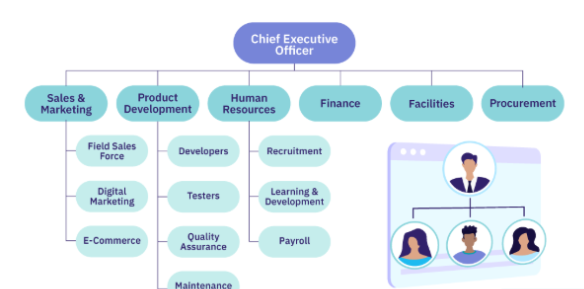
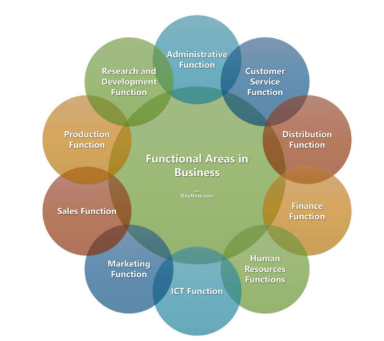
Each functional area concentrates on a particular aspect of the organisation’s activities, bringing together staff who share similar skills, responsibilities or objectives. This grouping of tasks makes it easier for organisations to develop expertise, maintain clarity in responsibilities and coordinate work across different departments. Although the specific names and duties of these functions vary depending on the organisation’s size, industry and strategy, most workplaces include functions that produce goods or services, promote and sell those goods or services, manage money and support employees.
You should understand that functional areas exist because organisations are complex. No single individual or team could manage production, sales, finances and people all at the same time. By dividing work into separate functions, an organisation becomes more organised and more capable of handling a wide variety of tasks. Understanding these areas allows you to build a clear picture of how organisations operate internally and how each part contributes to the organisation’s overall purpose.
In addition to these core functions, many organisations have developed new or specialised functions to deal with modern business needs. For example, organisations operating in highly innovative markets may have a research and development function that focuses on future products. Digital businesses may rely heavily on information technology teams. Customer-facing organisations may give significant attention to customer service or client relations. This variation demonstrates the flexibility of functional structures and how organisations adapt their internal arrangements to suit their strategic goals.
The operations or production function
Operations is the function responsible for creating or delivering the organisation’s product or service. In a manufacturing context, this could involve sourcing materials, managing machinery, supervising production lines, checking quality standards and distributing finished goods. In service organisations, operations may include tasks such as staffing service delivery points, managing appointment systems, ensuring the availability of equipment or maintaining service quality.
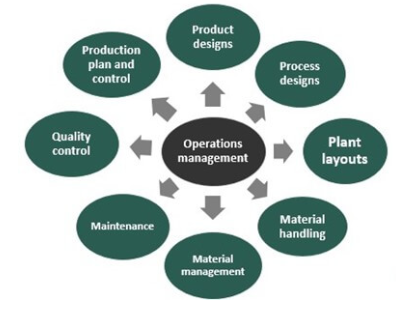
Operations are central to an organisation’s reputation because it directly affects what the customer receives. When operations run smoothly, products and services are delivered on time and at the expected level of quality. When operations are poorly organised, customers may experience delays, errors or dissatisfaction. This function also relies heavily on effective communication with other departments. For instance, operations need information from marketing about expected customer demand, from finance about approved budgets and from HR about staffing levels and training needs. A strong operations function therefore contributes significantly to an organisation’s efficiency, productivity and customer satisfaction.
The marketing and sales function
Marketing and sales support the organisation by connecting it to customers and the wider market. Although these two functions are related, they perform different roles.
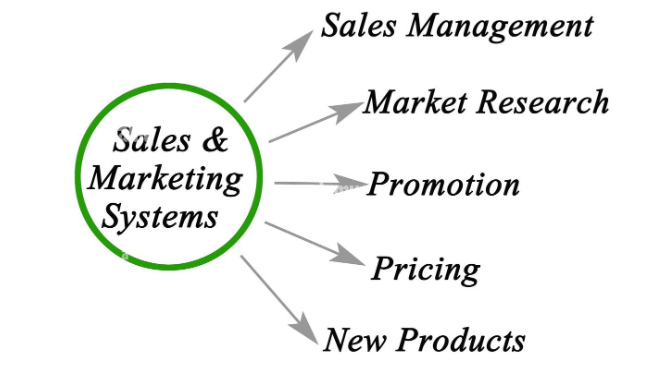
Marketing is concerned with understanding customer needs, studying the competitive environment, developing attractive products or services and communicating value to customers. It may involve conducting market research, designing promotional campaigns, setting pricing strategies and choosing promotional channels such as social media, print advertising or digital marketing platforms.
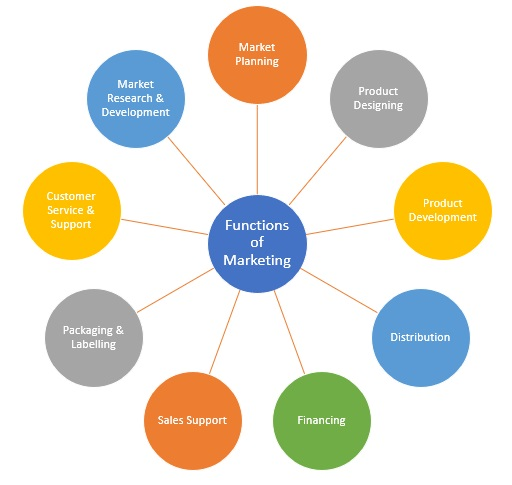
Sales, while closely linked to marketing, is focused on turning interest into actual purchases. The sales team works directly with customers, answering questions, negotiating terms and maintaining long-term relationships. Sales activity is essential because it generates the revenue that funds the organisation’s operations.
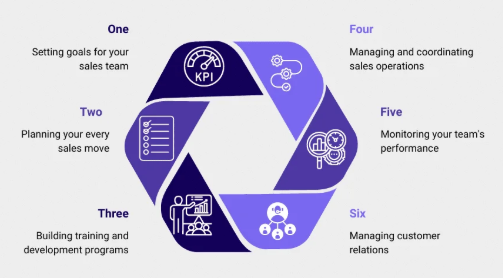
You should recognise that marketing and sales must work closely together. Marketing shapes the messaging and creates demand, while sales teams bring in revenue and provide direct feedback from customers. When these two functions are aligned, the organisation is more likely to attract and retain customers. When they are not aligned, misunderstandings or missed opportunities may occur. Marketing may promote products that operations cannot deliver at the required scale, or sales may struggle to meet targets if marketing does not effectively identify customer needs.
The finance and accounting function
Finance is responsible for managing the organisation’s financial resources. It records financial activity, produces budgets, monitors expenditure, forecasts future income and ensures that the organisation complies with financial regulations. Finance teams help managers understand the financial consequences of their decisions. For example, deciding whether to launch a new product, expand operations or recruit additional staff all require financial evaluation.
This function is vital for maintaining financial stability and supporting planning across the organisation. Operations need funding to buy materials or equipment. Marketing requires budgets to run promotional campaigns. HR requires resources to recruit, train and pay staff. Finance ensures that these activities are affordable and sustainable. When financial control is weak, organisations may overspend, misallocate resources or face unexpected financial difficulties. A well-managed finance function therefore supports long-term organisational success.
The human resources function
Human resources (HR) focuses on the people working within the organisation. This includes recruiting staff, selecting candidates, providing induction, offering training and development opportunities, managing performance and ensuring staff welfare. HR also plays an important role in developing organisational culture, shaping pay and reward systems and ensuring that employment practices comply with laws and regulations.
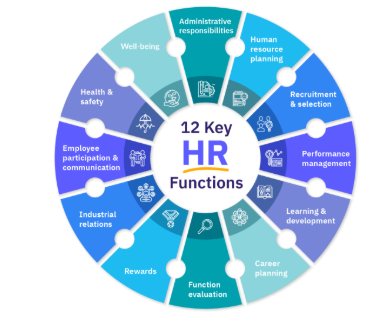
HR contributes to organisational stability by helping to maintain a skilled, motivated and supported workforce. It monitors issues such as staff retention, sickness absence and training needs. HR must also collaborate with other functions. For example, if operations require more staff during a busy period, HR must recruit and train people in time. If finance introduces new cost controls, HR may need to adjust salaries or staffing levels. HR influences not only the internal environment but also the organisation’s wider reputation as a fair and ethical employer.
Additional functional areas in contemporary organisations
In addition to the core functions described above, modern organisations may develop specialised functions to respond to new challenges or opportunities.
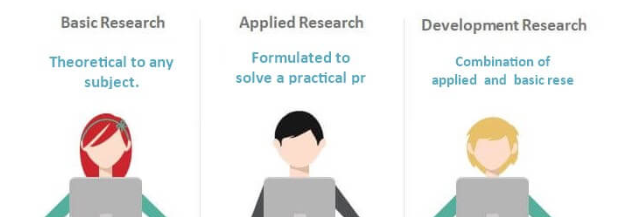
A research and development function focuses on innovation and designing products or services for the future.
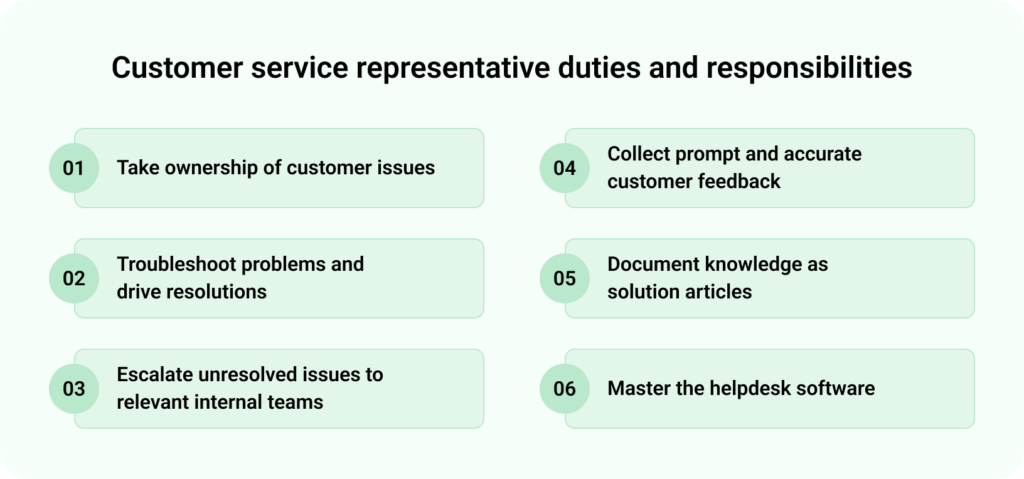
A customer service function manages complaints, solves customer problems and supports customer satisfaction. In many industries, logistics is essential for controlling stock, transport and distribution
Information technology functions support the digital systems that enable communication, data management and operational efficiency.
In some organisations, functions such as procurement, compliance, sustainability or data analysis are becoming increasingly important as businesses respond to technological change and regulatory requirements.
Understanding these additional functions helps you recognise that organisations evolve over time. As markets become more competitive and technology becomes more advanced, organisations often need more specialised roles to maintain effective operations.
How functional areas work together
Although functional areas have distinct responsibilities, they do not operate independently.
Organisations work effectively only when each function collaborates with others. Decisions made in one area often influence the work of several others. For instance, if marketing predicts an increase in sales, operations must plan additional production, finance must approve the necessary budget and HR may need to recruit more staff. In this way, functional areas depend on each other to achieve organisational goals.
When functions work well together, organisations achieve smoother operations, better communication and greater efficiency. When functions do not coordinate effectively, problems may arise. A breakdown in operations may increase complaints to customer service. Limited financial resources may delay marketing campaigns. Poor communication between HR and operations may lead to understaffing. These interconnections demonstrate that functional areas must align their goals and communicate regularly to ensure that the organisation performs well.
Interested in our Business Courses?
Click College offers a wide range of fully online accredited business management courses and qualifications to suit different academic backgrounds and career goals. Our programmes range from short 40 credit Professional Diplomasthrough to the 360 credit International Graduate Diploma, which is academically comparable to a bachelor’s degree. All courses are open access and available to learners worldwide.
With courses available in business management, marketing, finance, HR, hospitality & tourism and project management, Click College provides flexible learning pathways to support professional development, career progression or further study.
All Courses
Explore our courses and find a qualification that fits your goals and your schedule.
First Year of Undergraduate (Level 4 – 120 Credits)
The Higher International Certificate courses are accredited and delivered at Level 4 of the UK FHEQ framework, making them academically comparable to the first year of undergraduate study.
Years One and Two of Undergraduate (Level 5 – 240 Credits)
The Higher International Diploma courses are accredited and available with 240 Credits at Level 5 of the UK FHEQ framework, making it academically comparable to a Foundation Degree (UK) or an Associate Degree (US).
Degree-Comparable International Graduate Diploma (Level 6 – 360 Credits)
The International Graduate Diploma is accredited and delivered at Level 6 of the UK FHEQ framework. With 360 credits, it is academically comparable to a UK bachelor’s degree in terms of level and credit v







Recent Posts
Professional Diploma or Higher Qualification Pathway: Which Should You Choose?
Professional Diploma or Higher Qualification Pathway: Which Should You Choose? Choosing the right online qualification is not always simply a question of choosing the longest course or the highest level. For many learners, the better question is: what kind of study route fits my goals right now? Some learners want a focused qualification in one […]
Professional Diploma in Leadership and Management: Course Guide
Professional Diploma in Leadership and Management: Course Guide A Professional Diploma in Leadership and Management is designed for learners who want to develop advanced leadership, strategic thinking and organisational management skills without committing immediately to a full degree programme. Leadership and management are essential in almost every sector. Whether you work in business, education, hospitality, […]
Professional Diploma in Business Management: Who Is It For?
Professional Diploma in Business Management: Who Is It For? A Professional Diploma in Business Management is designed for learners who want to build practical business knowledge without committing immediately to a full degree or long higher education programme. It can be a useful option for people who want to understand how organisations work, how teams […]