Breaking Down Business: Common Organisational Structures Made Simple
Introduction
Organisational structure refers to the way an organisation arranges its people, activities and lines of authority so that work can be carried out effectively. It provides a framework for how decisions are made, how information flows and how responsibilities are shared.
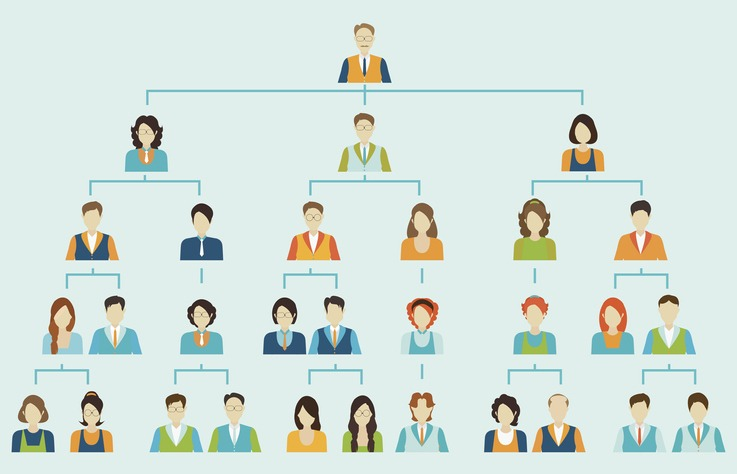
A clear structure helps individuals understand where they fit within the wider organisation, who they report to and how their work contributes to organisational goals. Structures have developed over time in response to changes in technology, organisational size and the need for coordination across increasingly complex environments. Although structures vary significantly between organisations, several established models are commonly used, each offering particular advantages and presenting certain challenges.
Functional Structure
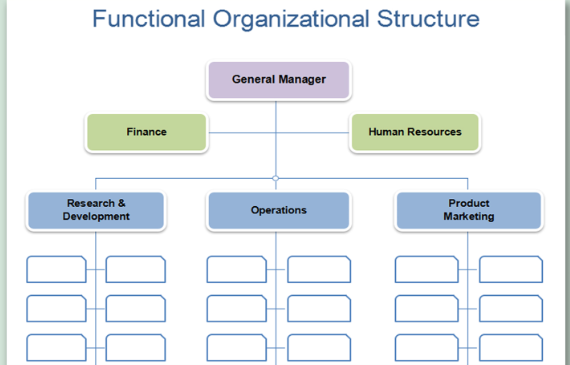
The functional structure is one of the earliest and most traditional forms of organisational design. In this type of structure, employees are grouped according to their professional expertise, such as finance, marketing, operations or human resources.
Grouping staff in this way allows each department to build specialist knowledge and maintain consistent processes. It supports efficiency because work is organised into clearly defined areas, and managers can supervise staff with similar skills. This can create stability and predictability, particularly in organisations where tasks are routine or where maintaining consistent quality is essential.
However, the same qualities that support internal efficiency can also create limitations. Departments may become isolated from one another, which can make it difficult to collaborate across functional boundaries. When several departments need to contribute to a single project, communication may be slower and decision-making more complicated. These structural characteristics can reduce an organisation’s ability to respond quickly to new opportunities or changing market conditions.
Divisional Structure
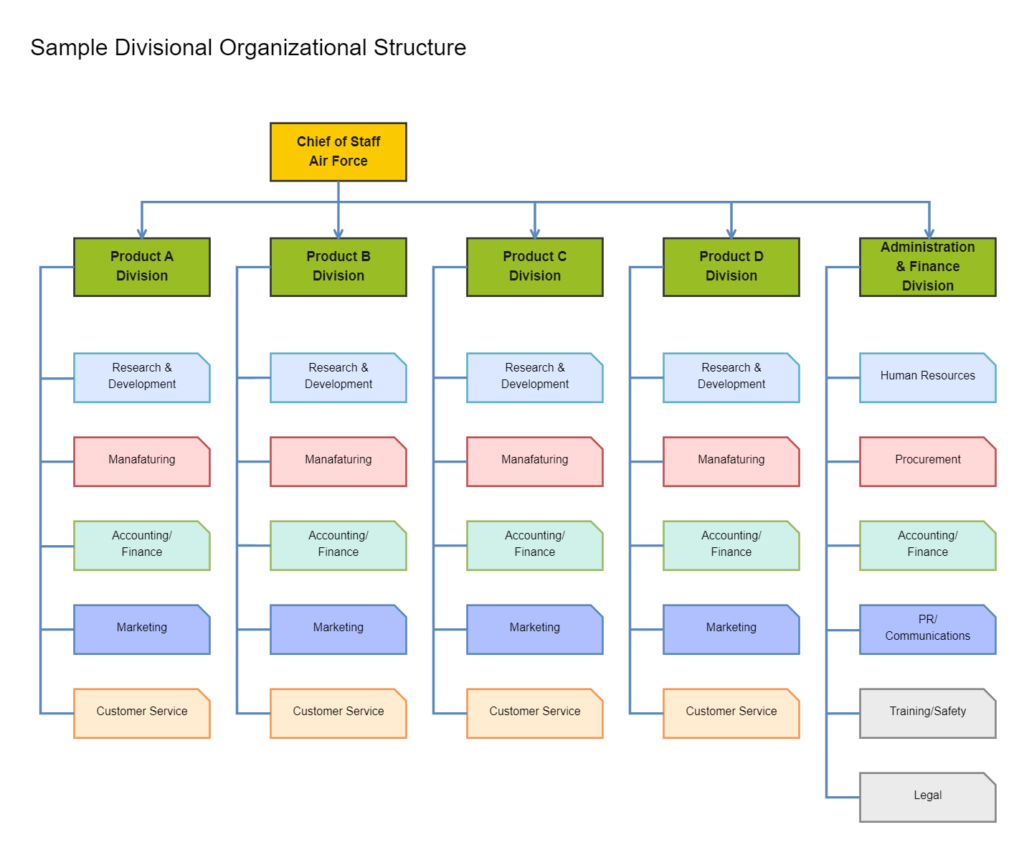
A divisional structure represents a more flexible approach and is often found in larger organisations that offer multiple products or operate in different geographical regions. Instead of grouping people by function, the organisation groups them by product line, service area or region.
Each division typically operates like a smaller organisation within the larger one, with its own functional departments. This structure can support responsiveness because each division can focus closely on the needs of its particular market and make decisions quickly. It encourages accountability and can lead to improved customer service because divisions are closer to their specific audiences. However, divisional structures also have limitations. Because each division may replicate support functions such as finance or marketing, the organisation may incur higher overall costs. Maintaining consistent policies and culture across divisions may also be challenging, as different divisions may develop their own ways of working.
Matrix Structure
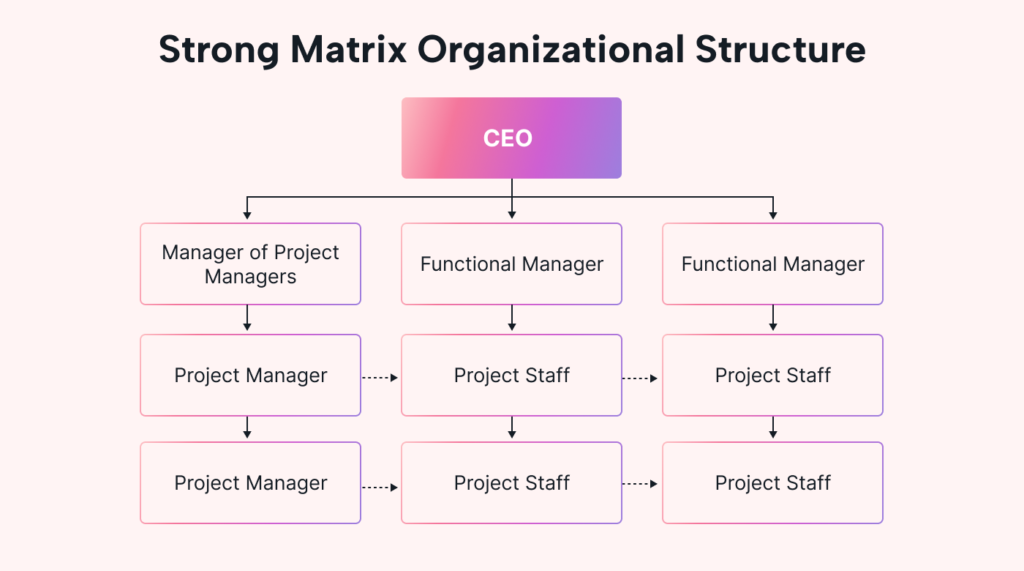
The matrix structure combines elements of both functional and divisional designs. Employees belong to a functional department but also work on cross-functional project or product teams. This enables the organisation to draw on specialist knowledge while also promoting collaboration across different areas. Matrix structures are often used in environments that require flexibility, innovation or complex project work.
They can improve communication between departments, reduce duplication and allow organisations to adapt quickly to changing demands. However, the matrix structure is more complex to manage than either functional or divisional structures. Because employees may report to more than one manager, they may experience conflicting priorities or uncertainty about whose instructions take precedence. Coordination requires regular communication, and without clear processes, the structure may become confusing or inefficient. The matrix structure can therefore enhance organisational capability but only when supported by strong communication and effective leadership.
Hybrid Systems
Many organisations today do not rely solely on one structure but instead adopt hybrid designs that combine aspects of several models. Smaller technology firms, for example, may use a flatter, team-based approach that reduces layers of management and encourages fast decision-making. Some organisations adopt networked or agile structures that allow project teams to form and dissolve as needed. The choice of structure often reflects not only the organisation’s size and industry but also its strategy, culture and appetite for innovation.
Understanding organisational structures is essential because structure shapes much of what happens within an organisation. It influences how problems are solved, how quickly decisions are made, how employees collaborate and how effectively the organisation can respond to change. Each structure offers strengths that can support particular organisational goals, but also presents limitations that must be managed carefully. By examining these structures, you can begin to understand why organisations design themselves in particular ways and how structure influences organisational performance.
Case Study
Orion Electronics is a medium-sized manufacturer of home audio equipment. For several years it operated using a functional structure, with teams for marketing, finance, production and sales. This worked well when the company produced a small range of traditional speakers.
As Orion expanded into smart home devices, the original structure became less effective. Marketing campaigns were developed without full awareness of production schedules, and different teams struggled to coordinate product launches. Managers realised that the growing variety of products required faster and more integrated decision-making.
The company transitioned to a divisional structure, creating separate divisions for Home Audio, Portable Devices and Smart Technology. Each division gained responsibility for its own budgeting, marketing and product development. The change improved focus and reduced delays, because decisions were made closer to the product lines. However, the company also noticed that some administrative tasks were duplicated across divisions, which increased costs. This demonstrates how organisational structures must adapt as an organisation evolves and how each structure brings both benefits and limitations.
Interested in our Business Courses?
Click College offers a wide range of fully online accredited business management courses and qualifications to suit different academic backgrounds and career goals. Our programmes range from short 40 credit Professional Diplomasthrough to the 360 credit International Graduate Diploma, which is academically comparable to a bachelor’s degree. All courses are open access and available to learners worldwide.
With courses available in business management, marketing, finance, HR, hospitality & tourism and project management, Click College provides flexible learning pathways to support professional development, career progression or further study.
All Courses
Explore our courses and find a qualification that fits your goals and your schedule.
First Year of Undergraduate (Level 4 – 120 Credits)
The Higher International Certificate courses are accredited and delivered at Level 4 of the UK FHEQ framework, making them academically comparable to the first year of undergraduate study.
Years One and Two of Undergraduate (Level 5 – 240 Credits)
The Higher International Diploma courses are accredited and available with 240 Credits at Level 5 of the UK FHEQ framework, making it academically comparable to a Foundation Degree (UK) or an Associate Degree (US).
Degree-Comparable International Graduate Diploma (Level 6 – 360 Credits)
The International Graduate Diploma is accredited and delivered at Level 6 of the UK FHEQ framework. With 360 credits, it is academically comparable to a UK bachelor’s degree in terms of level and credit v





Recent Posts
Professional Diploma or Higher Qualification Pathway: Which Should You Choose?
Professional Diploma or Higher Qualification Pathway: Which Should You Choose? Choosing the right online qualification is not always simply a question of choosing the longest course or the highest level. For many learners, the better question is: what kind of study route fits my goals right now? Some learners want a focused qualification in one […]
Professional Diploma in Leadership and Management: Course Guide
Professional Diploma in Leadership and Management: Course Guide A Professional Diploma in Leadership and Management is designed for learners who want to develop advanced leadership, strategic thinking and organisational management skills without committing immediately to a full degree programme. Leadership and management are essential in almost every sector. Whether you work in business, education, hospitality, […]
Professional Diploma in Business Management: Who Is It For?
Professional Diploma in Business Management: Who Is It For? A Professional Diploma in Business Management is designed for learners who want to build practical business knowledge without committing immediately to a full degree or long higher education programme. It can be a useful option for people who want to understand how organisations work, how teams […]