The Role of External Factors in Decision-Making
Introduction
Every organisation, regardless of its size, sector, or mission, operates within a wider external environment that shapes its decisions, behaviour, and long-term direction. While managers can control internal factors such as staff, processes, and resources, they have very little control over these powerful external forces. These forces, which form the macro-environment, can create significant opportunities, such as new markets, supportive regulation, or rapid technological advancement, or pose significant threats, such as economic downturns, political instability, or radical shifts in consumer expectations.
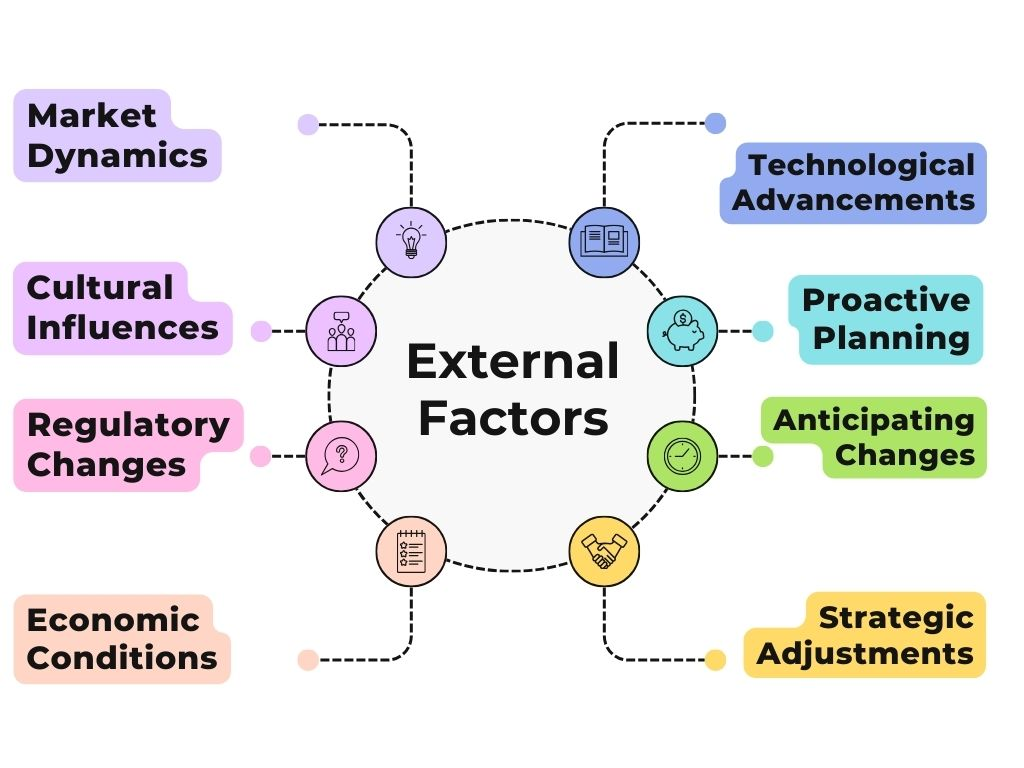
Because the external environment is broad and complex, organisations require a structured way to systematically analyse and understand it. The most widely used tool for this purpose is PESTLE analysis, which examines six distinct, yet highly interconnected, categories of influence: Political, Economic, Social, Technological, Legal, and Environmental. Using this framework encourages managers to look beyond day-to-day internal priorities, anticipate change, reduce strategic risk, and develop strategies that are realistic and responsive to future developments.
Political Factors
Political influences arise from government decisions, public policy, and the broader geopolitical and political climate. These factors often determine the “rules of the game” within which all organisations must operate.
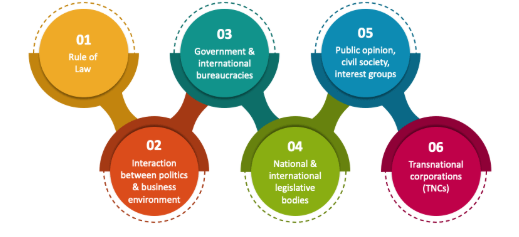
Key areas of influence include:
- Fiscal and Monetary Policy: Government decisions on taxation policies (e.g., corporation tax, VAT) directly affect organisational profitability and consumer spending power. Similarly, public sector funding priorities, such as infrastructure projects or support for specific industries, can create growth opportunities for aligned businesses.
- Regulatory Cycles: Political agendas dictate cycles of deregulation (reducing barriers to entry and compliance burdens) or re-regulation (increasing standards for safety, finance, or environmental protection). These shifts force compliance decisions and resource allocation within companies.
- International Relations and Trade: Political decisions regarding trade agreements, tariffs, sanctions, and protectionist measures can open or restrict access to certain international markets, directly impacting supply chain costs and export strategies.
- Political Stability and Ideology: High levels of political instability or conflict introduce significant risk to long-term planning. Furthermore, the prevailing political ideology (e.g., socialist, free-market, nationalist) of the governing party influences policies on privatisation, nationalisation, public spending on health and education, and state intervention in the economy.
A business that anticipates upcoming regulatory change, such as shifts in employment law or public health requirements, is far better placed to adapt than one that reacts only once the change is officially enforced. Effective political analysis involves not just tracking legislation but understanding the underlying power structures and vested interests driving these decisions.
Economic Factors: Financial Health and Demand
Economic factors refer to the overall health, performance, and financial conditions of the national and global economies in which organisations operate. Economic conditions affect both household spending power and organisational costs
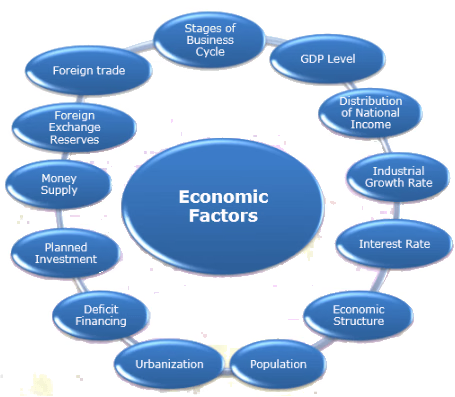
Key areas of influence include:
- Inflation and Interest Rates: Rising inflation reduces real purchasing power, forcing consumers to reduce spending on non-essential goods. Simultaneously, central bank decisions on interest rates affect the cost of borrowing; when rates rise, accessing finance for expansion or capital projects becomes more expensive, limiting organisational investment.
- Demand Elasticity and Pricing Strategy: In periods of economic downturn, consumer confidence falls, and organisations may be forced to cut costs, delay expansion plans, or shift their product mix toward value-focused options. Conversely, economic growth can increase demand, encourage investment, and support innovation.
- Currency and Global Trade: Fluctuations in exchange rates can have significant implications for companies that import materials (increasing their cost of goods) or export products (affecting their pricing competitiveness in foreign markets). Global trade imbalances and shifts toward protectionism can dramatically alter the cost and complexity of international operations.
- Labour Market Dynamics: Employment levels and wage growth determine the availability and cost of labour, directly influencing operational expenses and the feasibility of human resources planning. Unemployment rates, particularly among skilled workers, are a critical economic indicator for talent strategy.
Understanding economic trends allows organisations to prepare for potential fluctuations in demand, manage financial risks, and make informed strategic decisions about budgeting and investment, often requiring the use of sophisticated economic forecasting models to predict future cycles.
Social Factors: Culture and Consumption
Social factors capture the attitudes, behaviours, cultural values, and demographic characteristics of the population, which fundamentally shape what customers value and how they interact with brands.

Relevant areas include:
- Demographic Shifts: Changes in age distribution (e.g., an ageing population), population growth rates, and family structures directly influence demand. Generational differences, such as the digital fluency of Gen Z versus the consumer habits of Baby Boomers, necessitate highly tailored product and marketing strategies.
- Lifestyle and Values: Shifts in lifestyle trends, education levels, and expectations around work–life balance influence both consumer products and talent management strategies. Growing social awareness of health, sustainability, and ethical consumption compels businesses to be more transparent and introduce environmentally responsible product ranges.
- Workplace Expectations: Social attitudes towards diversity, equality, and inclusion, along with workplace wellbeing, increasingly shape organisational culture, policies, and public branding. Failure to align with these expectations can lead to reputational damage and difficulties in talent acquisition.
- Cultural Trends and Media: The rise of social media rapidly accelerates the speed at which cultural values and consumer tastes change. This requires organisations to be highly agile in their product development and marketing efforts, often having to manage viral trends and public discourse instantly.
By monitoring social trends, organisations can better understand shifting customer preferences, anticipate demand for new products, and ensure they remain relevant in a changing society. This requires deep market research to track latent needs and cultural shifts before they become mainstream.
Technological Factors: Disruption and Efficiency
Technological factors describe the impact of innovation, scientific progress, and technological development on how industries operate, how products are created, and how customers interact with services. This is arguably the most rapidly evolving of the PESTLE factors.

Key areas of influence include:
- Digital Transformation: Innovations like online shopping, mobile banking, cloud computing, and e-learning platforms have fundamentally reshaped retail, finance, education, and entertainment. Organisations that embrace these changes can deliver faster, more personalised services and streamline processes.
- Automation and AI: The increasing sophistication of automation, robotics, and Artificial Intelligence affects internal operations by improving efficiency and reducing labour costs in manufacturing and administration. This requires strategic decisions on upskilling, future workforce planning, and grappling with the ethical implications of autonomous systems.
- Data and Analytics: Advanced data analytics and the proliferation of sensors and Internet of Things devices provide deeper customer insights but also exponentially increase the volume of data that needs to be managed and secured.
- Future Disruptors: While current technology drives strategy, companies must also monitor emerging fields like quantum computing, biotechnology, and advanced material science, which hold the potential for industry-level disruption in the medium to long term.
Organisations must remain acutely aware of technological trends because failing to adapt can quickly lead to a critical loss of competitiveness, while early and successful adopters often gain a strategic advantage through the establishment of new industry standards.
Legal Factors: Mandatory Compliance
Legal factors refer to the comprehensive framework of laws and regulations that organisations must adhere to within a given jurisdiction. While often connected to political decisions, the legal environment focuses on the detailed, mandatory requirements that organisations must address in day-to-day operations.
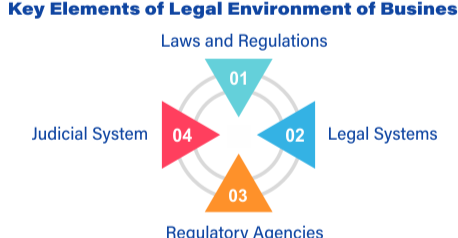
Some of the main factors are:
- Employment and Labour Law: These govern working hours, pay, contracts, discrimination, health and safety, and workplace conditions. Compliance requires detailed HR policies and continuous staff training to manage the rights and responsibilities of employees.
- Consumer Protection and Contract Law: Legislation in this area ensures that goods are safe, services are delivered fairly, and information provided to customers is accurate and not misleading. Fundamental contract law also governs how agreements are formed and enforced with suppliers, partners, and customers.
- Data Privacy and Intellectual Property: Laws such as the UK General Data Protection Regulation set strict rules for collecting, storing, processing, and using personal information. Separately, intellectual property rights (patents, trademarks, copyrights) are legally protected assets that organisations must defend and manage.
- Industry-Specific Compliance: Regulations specific to sectors like finance, pharmaceuticals, or construction impose detailed, non-negotiable standards and licensing requirements, often enforced by powerful regulatory bodies.
Legal factors are crucial because non-compliance can lead to fines, court action, reputational damage, or even business closure. Organisations must therefore establish robust monitoring systems to track legal developments and ensure that internal policies and processes are always up to date, turning mandatory compliance into a competitive advantage where possible.
Environmental Factors: Sustainability and Climate Resilience
Environmental factors relate to the natural world, ecological considerations, and the pressure on organisations to operate sustainably and minimise their environmental footprint.

Several key environmental factors can be summarised as:
- Climate Change and Weather: Climate change and the resulting increase in extreme weather events can disrupt agriculture, transport, global supply chains, and manufacturing, impacting production and pricing. Organisations must decide on strategies for climate resilience, including physical and insurance risk management.
- Resource Management and the Circular Economy: This includes issues of resource availability (e.g., water, rare earth minerals), waste management, and pollution. Companies are increasingly moving beyond simple waste reduction to embrace “circular economy” models, where products are designed for durability, reuse, and recycling.
- Regulatory Demands: Environmental regulation continues to strengthen globally, setting demanding standards for carbon emissions, water discharge, and packaging. Compliance requires significant changes in operational processes and investment in cleaner technology and renewable energy sources.
- Social and Investor Pressure: As societies become more conscious, organisations must demonstrate responsibility through measurable steps like recyclable packaging, reduced energy consumption, and ethical supply chains. This also links to Environmental, Social, and Governance criteria, which increasingly influence investor decisions and access to capital, placing environmental performance at the heart of financial viability.
Environmental factors affect not only corporate reputation but also long-term business viability, making them a core part of strategic planning that extends beyond simple compliance and into genuine ecological stewardship.
External factors shape the decisions organisations make at every level. While internal resources such as staff skills, finances and technology play an important role, decisions must also reflect the wider environment in which the organisation operates. Changes in the economy, regulation, technology, demographics and societal expectations can create both opportunities and risks. Effective decision-making therefore depends on the organisation’s ability to interpret these external influences and incorporate them into strategic, operational and financial choices.
Economic conditions are often among the most influential external factors affecting decision-making. For example, during periods of rising interest rates, organisations may delay investment, postpone expansion or prioritise cost-saving measures because borrowing becomes more expensive. Inflation may push organisations to reconsider pricing strategies, renegotiate supplier contracts or find more efficient ways of working. Conversely, when economic conditions are strong and consumer confidence is high, organisations may pursue more ambitious decisions such as launching new products or entering new markets.
Technological developments also play a major role in shaping organisational decisions. Rapid advances in artificial intelligence, automation, digitalisation and data analytics can encourage organisations to adopt new systems, redesign processes or invest in upskilling staff. Decisions about technology adoption often involve balancing potential efficiencies and competitive advantages against financial cost, cybersecurity risks and organisational readiness for change. In some industries, failing to keep up with technological change can lead to loss of market share or declining customer satisfaction.
Regulatory and legal factors similarly influence decision-making by setting boundaries within which organisations must operate. New employment laws may require organisations to change recruitment practices, review contracts or provide additional staff training. Consumer protection legislation may influence decisions about product design, labelling, advertising or quality assurance. When regulations change quickly, particularly in areas such as data protection, financial compliance or environmental standards, organisations may need to redirect resources, update systems or reconsider their operational approach.
Social and demographic changes can also shape decisions, particularly those relating to workforce planning and customer engagement. Organisations may need to adapt their products or services in response to changing consumer values, such as increasing demand for ethical, sustainable or personalised offerings. Shifts in population age, lifestyle or migration patterns may prompt decisions about market targeting, staffing levels, welfare policies or flexible working arrangements.
Case Studies
Decision-Making in the Retail Sector
A national retail chain experiences a sudden increase in energy costs alongside declining consumer spending due to wider economic pressures. These external factors force the retailer to reassess its operational priorities. The organisation decides to reduce store opening hours in low-traffic locations to lower operating costs, introduce more energy-efficient equipment, and expand its online sales channel to reach customers who are reducing in-store visits. It also adjusts its product range to include more value-focused items in response to shifting consumer behaviour. This example illustrates how external economic and social conditions can directly shape both strategic and day-to-day decisions.
A national retail chain experiences a sudden increase in energy costs alongside declining consumer spending due to wider economic pressures. These external factors force the retailer to reassess its operational priorities. The organisation decides to reduce store opening hours in low-traffic locations to lower operating costs, introduce more energy-efficient equipment, and expand its online sales channel to reach customers who are reducing in-store visits. It also adjusts its product range to include more value-focused items in response to shifting consumer behaviour. This example illustrates how external economic and social conditions can directly shape both strategic and day-to-day decisions.
The Decision Challenge: Technology and Vision
Blockbuster Video, a former market leader in video rental, faced a significant Technological factor: the transition from physical media (VHS/DVD) to digital delivery (streaming) and mail-order services. The central strategic decision was whether to rapidly transition their entire business model to compete with emerging technological rivals like Netflix.

Blockbuster’s Decision: They chose to rely on their established physical retail dominance, delaying the decision to embrace digital innovation fully. This was a critical failure to respond to a major external threat.
Netflix’s Decision: They continuously embraced the technological opportunity, moving from mail-order DVDs to pioneering streaming technology, and crucially, using Technological factors (data analytics) to inform content acquisition decisions.
The Outcome: Blockbuster’s reluctance to change its core business model in the face of a technological shift led to bankruptcy, while Netflix’s decision to embrace and lead that shift created a massive, sustained strategic advantage.
Interested in our Business Courses?
Click College offers a wide range of fully online accredited business management courses and qualifications to suit different academic backgrounds and career goals. Our programmes range from short 40 credit Professional Diplomasthrough to the 360 credit International Graduate Diploma, which is academically comparable to a bachelor’s degree. All courses are open access and available to learners worldwide.
With courses available in business management, marketing, finance, HR, hospitality & tourism and project management, Click College provides flexible learning pathways to support professional development, career progression or further study.
All Courses
Explore our courses and find a qualification that fits your goals and your schedule.
First Year of Undergraduate (Level 4 – 120 Credits)
The Higher International Certificate courses are accredited and delivered at Level 4 of the UK FHEQ framework, making them academically comparable to the first year of undergraduate study.
Years One and Two of Undergraduate (Level 5 – 240 Credits)
The Higher International Diploma courses are accredited and available with 240 Credits at Level 5 of the UK FHEQ framework, making it academically comparable to a Foundation Degree (UK) or an Associate Degree (US).
Degree-Comparable International Graduate Diploma (Level 6 – 360 Credits)
The International Graduate Diploma is accredited and delivered at Level 6 of the UK FHEQ framework. With 360 credits, it is academically comparable to a UK bachelor’s degree in terms of level and credit val







Recent Posts
Professional Diploma or Higher Qualification Pathway: Which Should You Choose?
Professional Diploma or Higher Qualification Pathway: Which Should You Choose? Choosing the right online qualification is not always simply a question of choosing the longest course or the highest level. For many learners, the better question is: what kind of study route fits my goals right now? Some learners want a focused qualification in one […]
Professional Diploma in Leadership and Management: Course Guide
Professional Diploma in Leadership and Management: Course Guide A Professional Diploma in Leadership and Management is designed for learners who want to develop advanced leadership, strategic thinking and organisational management skills without committing immediately to a full degree programme. Leadership and management are essential in almost every sector. Whether you work in business, education, hospitality, […]
Professional Diploma in Business Management: Who Is It For?
Professional Diploma in Business Management: Who Is It For? A Professional Diploma in Business Management is designed for learners who want to build practical business knowledge without committing immediately to a full degree or long higher education programme. It can be a useful option for people who want to understand how organisations work, how teams […]